BACK TO ALL SERIES

Islam, AI, and the Future of Humanity
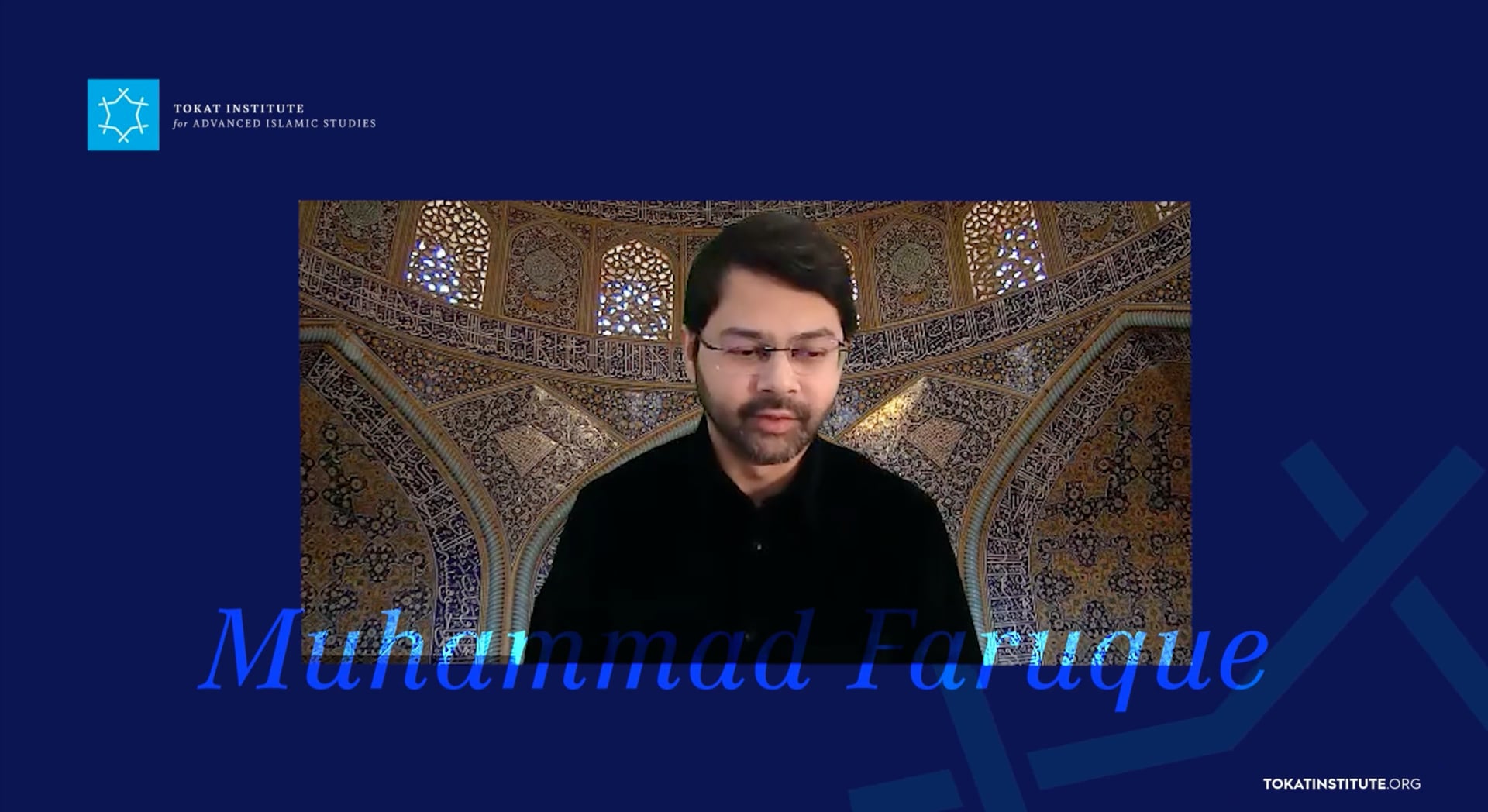
Professor Muhammad Faruque
This introductory course examines how emerging technologies are transforming our understanding of knowledge, ethics, intelligence, and the very notion of what it means to be human.
ONLINE COURSE
9 Hours
LECTURES
6 Sessions
STREAM
PRE-RECORDED
Course Description
This introductory course examines how emerging technologies are transforming our understanding of knowledge, ethics, intelligence, and the very notion of what it means to be human. By exploring the intersections of Islamic thought, the philosophy of technology, and contemporary debates on AI, the course offers a foundational framework for engaging critically and ethically with technological change. Topics include the ethical imperative to prioritize moral human development over the pursuit of moral AI, the contested possibility of AI consciousness, and the implications of viewing AI as either tools, collaborators, or reflective mirrors of human desires and limitations. We will also consider the spiritual and ethical responsibilities involved in shaping the future of AI, drawing on insights from Islamic philosophy and current scientific discourse.
Learning Outcomes
- Analyze the foundational assumptions about mind, consciousness, and language that underlie contemporary AI, and explain how these assumptions shape modern understandings of intelligence.
- Explain why AI represents the culmination of the modern scientific spirit—especially Galileo’s vision of quantifying reality—and why studying AI is essential for understanding the technological foundations of the modern world.
- Critically evaluate the technological worldview, cultural ideologies, and Silicon Valley values that drive the development and global influence of AI. Also, examine how AI reflects deeper cultural transformations: quantification of meaning, commodification of knowledge, automation of cognition.
- Understand Islamic conceptions of knowledge, consciousness, and intelligence to articulate alternative frameworks for navigating the future of humanity in the age of machine learning.
- Demonstrate how viewing AI through an Islamic intellectual lens can illuminate new pathways for responding to contemporary challenges and rethinking human identity, agency, and responsibility.
Session 1
Topic: Introduction: AI, Humanity, and Islamic Perspectives
Readings:
- Chaudhary, “Islam and Artificial Intelligence.”
- Russell and Norvig, Artificial Intelligence: A Modern Approach, 4e, Ch. 1.
- Wooldridge, Brief History of Artificial Intelligence, selections.
- Donnelly, Descent of Artificial Intelligence, Introduction and Ch. 1.
Supplementary Readings:
- Nilsson, The Quest for Artificial Intelligence.
- Crawford, Atlas of AI.
- Domingos, The Master Algorithm.
- LeCun, Bengio, and Hinton, “Deep Learning for AI.”
- Dick, “Artificial Intelligence.”
Lecture and Discussion:
- History and Development of AI
- What are the foundational assumptions about mind, consciousness, and language that underlie contemporary AI?
Session 2
Topic: Moral AI or Moral Human Beings?
Readings:
- Véliz, “Moral Zombies: Why Algorithms are not Moral Agents.”
- Bostrom, “Ethical Issues in Advanced Artificial Intelligence.”
- Faruque, “Opening Pandora’s Box: AI and Its Ethical Dilemmas”
- Qur’anic passages on moral agency
Supplementary Readings:
- Inloes, “The Golem, the Djinni, and ChatGPT: Artificial Intelligence and the Islamicate Occult Sciences.”
- Bostrom, Superintelligence.
Lecture and Discussion:
- Can we program morality into machines?
- Islamic ethics: cultivating the self vs. engineering behavior
Session 3
Topic: Consciousness: Islamic and Scientific Views
Readings:
- Faruque, Sculpting the Self, selections.
- Faruque, “AI versus Human Consciousness.”
- Strawson, “The Consciousness Deniers.”
- Grève and Xiaoyue, “Can Machines Be Conscious?”
Supplementary Readings:
- Russell and Norvig, Artificial Intelligence: A Modern Approach, 4e, Ch. 28.
- Wooldridge, Brief History of Artificial Intelligence, Ch. 9.
Lecture and Discussion:
- What is consciousness?
- Are we projecting human qualities onto machines?
- AI becoming conscious or minds becoming machines?
Session 4
Topic: Knowledge and Intelligence: Islamic and Scientific Views
Readings:
- Yazdi, Principles of Epistemology in Islamic Philosophy, selections.
- Gottfredson, “Mainstream Science on Intelligence.”
- McCarthy, “What Is Artificial Intelligence?”
Supplementary Readings:
- Russell and Norvig, Artificial Intelligence: A Modern Approach, 4e, Ch. 10.
- Kalin, Knowledge in Later Islamic Philosophy.
- Azadpur, Analytic Philosophy and Avicenna.
- Chomsky, “The False Promise of ChatGPT.”
Lecture and Discussion:
- Is “knowledge” the same as “information?”
- Is “intelligence” natural or artificial?
- Defining the term “human-level.”
Session 5
Topic: AI and Human Identity: Tools, Mirrors, or Partners?
Readings:
- Fuchs, “Narcissistic Depressive Technoscience.”
- Alang, “AI Is a False God: The Real Threat with Super Intelligence is Falling Prey to the Hype.”
Lecture and Discussion:
- Are LLMs tools, colleagues, or mirrors?
- The dangers of anthropomorphizing AI
Session 6
Topic: Reflections and Futures: Toward a Spiritually Responsible Technology
Readings:
- Faruque, “Immortality through AI?: Transhumanism, Islamic Philosophy, and the Quest for Spiritual Machines.”
- Faruque, “We are Not Our Brains: How Poets and Philosophers Saw the Immaterial Life of the Self.”
Supplementary Readings:
- Zuboff, Age of Surveillance Capitalism.
- Bostrom, Deep Utopia.
- Kurzweil, The Singularity Is Nearer.
Lecture and Discussion:
- How will AI shape our future?
- What does it mean to remain truly human and flourish in the age of AI?
Access Readings Link
Instructor Bio

Muhammad Faruque