Islamic Intellectual Traditions Journal
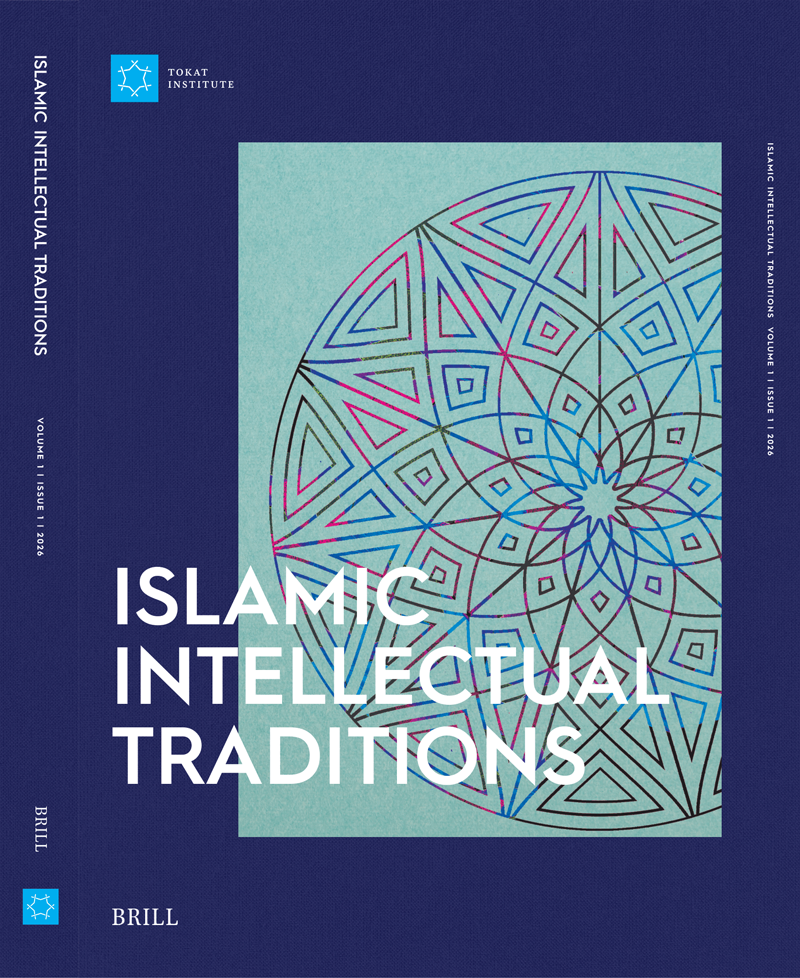
Islamic Intellectual Traditions, published by Brill, is an open access journal devoted to research on Islam’s diverse intellectual perspectives, schools, and figures across a wide geographical and historical scope.
The journal welcomes analytical studies, critical editions, and translations of texts covering fields such as philosophy, theology, mysticism, scriptural exegesis, legal theory, literature, anthropology, and sociology, as well as the intersections between these disciplines. It also publishes reviews of the latest and most significant books related to its subject matter.
Islamic Intellectual Traditions is a Diamond Open Access journal sponsored by the Tokat Institute.
Editor-in-Chief
Mohammed Rustom, Carleton University / Tokat Institute
Managing Editor
Cyrus Ali Zargar, University of Central Florida / Tokat Institute
Editors
Muhammad U. Faruque, University of Cincinnati / Tokat Institute
Kazuyo Murata, King’s College London
Book Review Editor
John Zaleski, University of Virginia
Advisory Board
Peter Adamson, LMU Munich
Syed Farid Alatas, National University of Singapore
Rosabel Ansari, Stony Brook University
Yousef Casewit, The University of Chicago Divinity School
Maria Dakake, George Mason University
Claire Gallien, University Montpellier 3
Nora Jacobsen Ben Hammed, University of California, Berkeley
Hina Khalid, University of Cambridge
Atif Khalil, University of Lethbridge
Sayeh Meisami, University of Dayton
Matthew Melvin-Koushki, University of South Carolina
Oludamini Ogunnaike, University of Virginia
Join the Institute.
Membership begins free — the lectures, the newsletter, and the scholarship application are open to all.