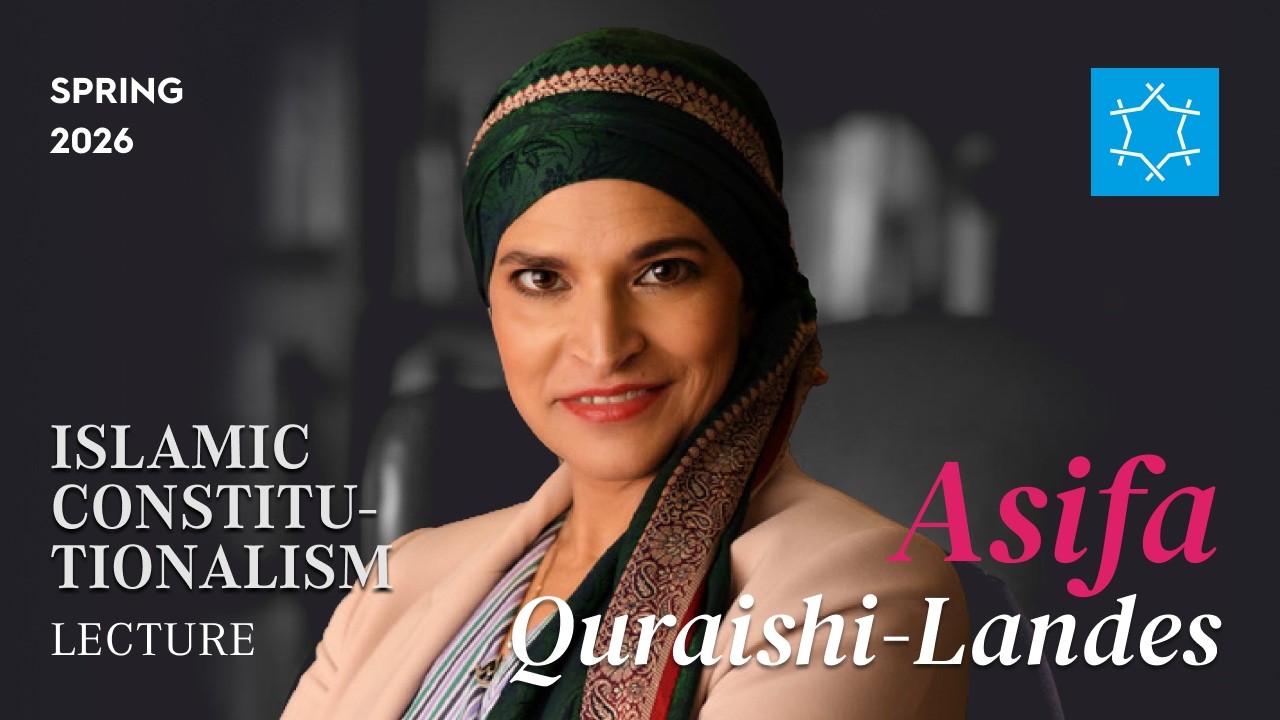
Asifa Quraishi-Landes specializes in comparative Islamic and U.S. constitutional law, with a current focus on modern Islamic constitutional theory. She is a 2009 Carnegie Scholar and 2012 Guggenheim Fellow. Recent publications include "Legislating Morality and Other Illusions about Islamic Government," (in Locating the Shari'a: Legal Fluidity in Theory, History and Practice, Nathan French & Sohaira Siddiqui editors) and "Healing a Wounded Islamic Constitutionalism: Sharia, Legal Pluralism, and Unlearning the Nation-State Paradigm (in Transformative Constitutionalism, Boaventura De Sousa Santos, editor). Currently, she is working on a book manuscript tentatively titled "Three Pillars Constitutionalism" in which she proposes a new model of Islamic constitutionalism for today's Muslim-majority countries.
Professor Quraishi-Landes holds a doctorate from Harvard Law School and other degrees from Columbia Law School, the University of California-Davis, and the University of California-Berkeley, and has served as law clerk in the United State Court of Appeals for the Ninth Circuit. She has served as a Public Delegate on the United States Delegation to the United Nations Commission on the Status of Women, the Task Force on Religion and the Making of U.S. Foreign Policy for the Chicago Council on Global Affairs, and as advisor to the Pew Task Force on Religion & Public Life. In recent years she has served as: President of the National Association of Muslim Lawyers (NAML), Co-Executive Director of Muslim Advocates, Executive Director of Muslim Public Service Network, Chair of the Board of Trustees of Bayan Islamic Graduate School, and President of Karamah: Muslim Women Lawyers for Human Rights.
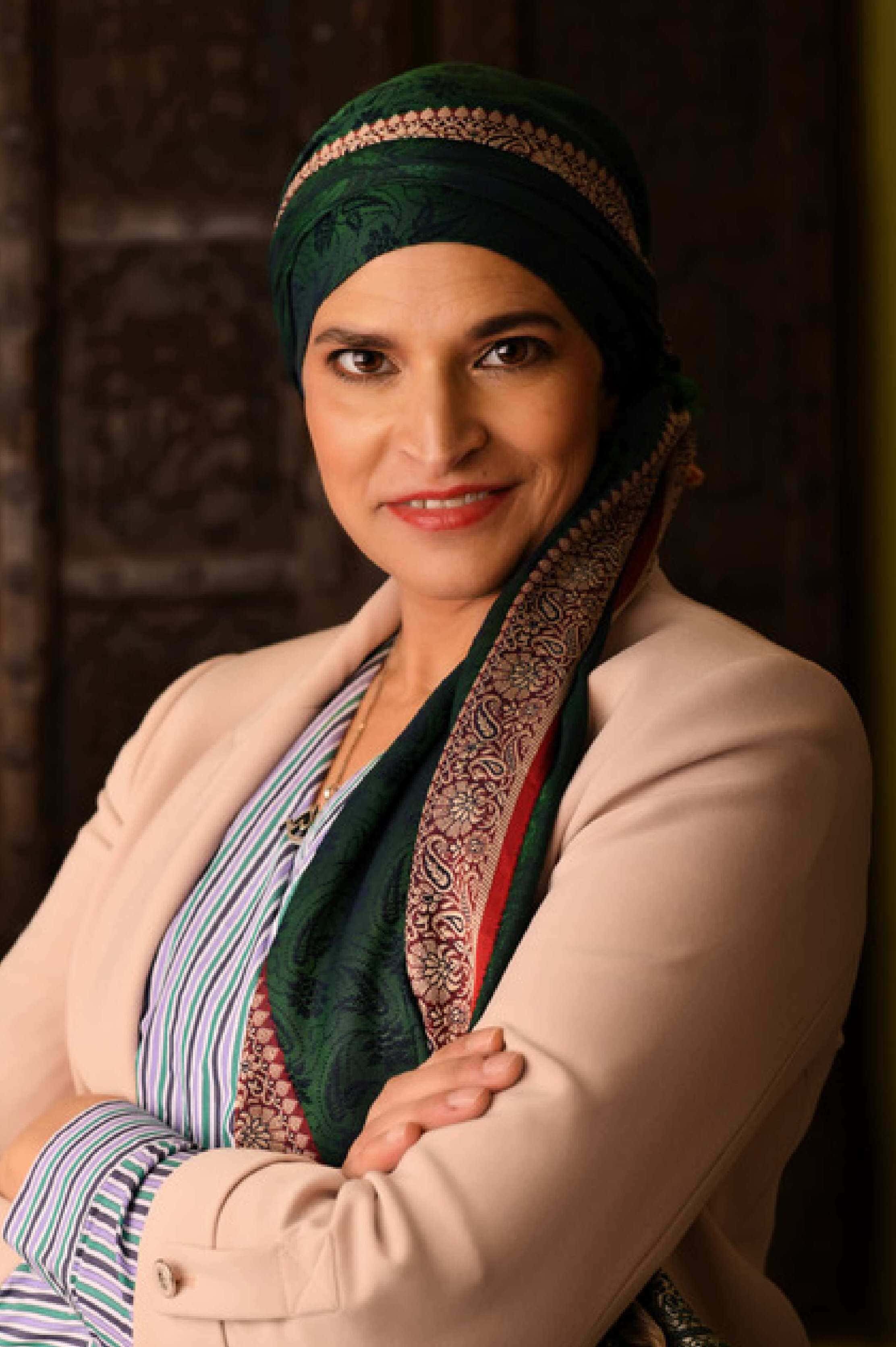

Seyyed Hossein Nasr is one of the world’s foremost authorities on Islamic intellectual and spiritual history. The first non-Western philosopher to give the Gifford Lectures, he has devoted sixty years to the recovery and transmission of the Islamic intellectual tradition. At Tokat, he teaches what cannot be found in any other living classroom.
Seyyed Hossein Nasr was born in Tehran in 1933 and educated in the United States, completing a doctorate in the history of science and learning at Harvard in 1958. He returned to Iran to teach at the University of Tehran and became president of the Iranian Academy of Philosophy before leaving the country in 1979.
Nasr’s scholarship spans Islamic philosophy, cosmology, and the history of science — but at its centre is a sustained argument that the Islamic intellectual tradition offers a coherent and living alternative to the dominant assumptions of modern Western thought.
He has written more than fifty books — among them Ideals and Realities of Islam, Knowledge and the Sacred, and Islamic Philosophy from its Origin to the Present. He is one of the few living scholars whose work belongs simultaneously to philosophy, religious studies, and the history of science.
At Tokat, Professor Nasr teaches what cannot be transmitted through books alone: the questions, the method of approach, and the felt sense of what Islamic metaphysics is asking.
An eight-week inquiry into being, knowledge, and existence as understood through the Islamic intellectual tradition — from Ibn Sina and Mulla Sadra to the living present. Not a survey. A sustained encounter with the deepest questions the tradition has asked.
An eight-week inquiry into being, knowledge, and existence as understood through the Islamic intellectual tradition. Not a survey. A sustained encounter with the deepest questions the tradition has asked.
This archive is available to Associate members. Scholar Notes, Deep Dives, and the full lecture library — included at $99 / year.
Become an AssociateThis archive is available to Associate members. Scholar Notes, Deep Dives, and the full lecture library — included at $99 / year.
Become an Associate