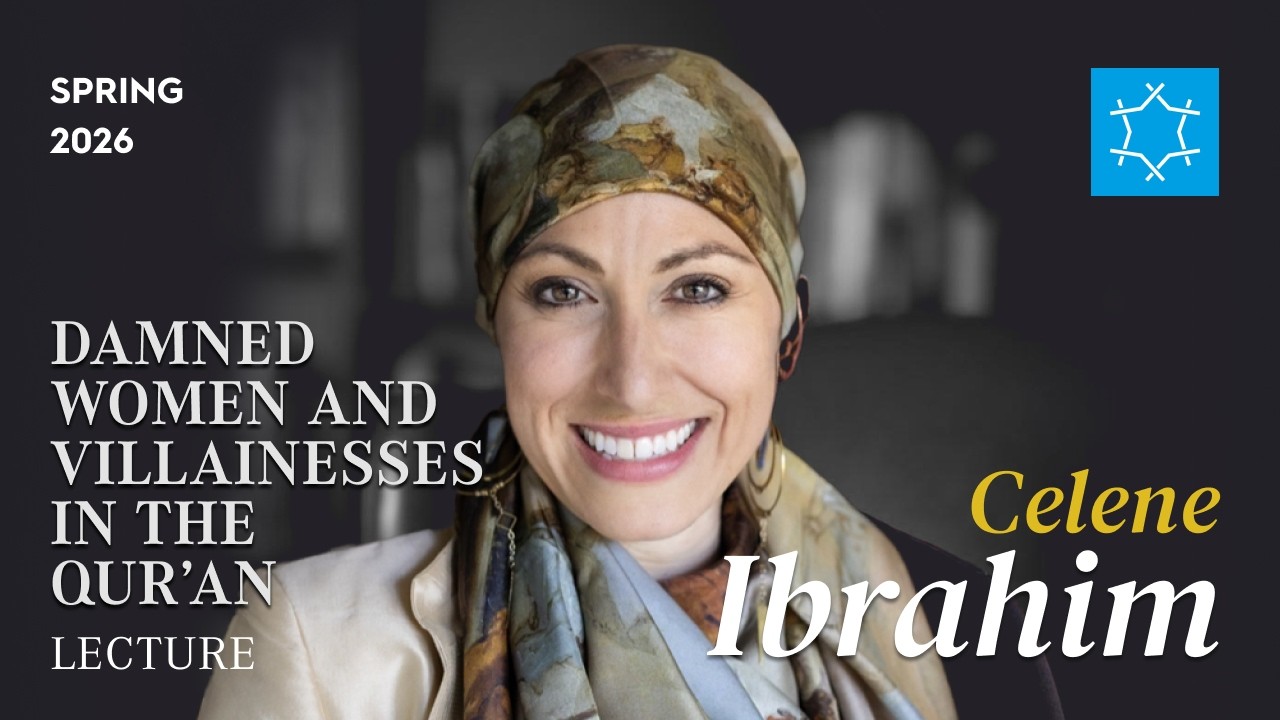
Dr. Celene Ibrahim is a cultural historian and multidisciplinary scholar known for her award-winning monograph Women and Gender in the Qur'an (Oxford University Press, 2020). Ibrahim is also the author of Islam and Monotheism (Cambridge University Press, 2022) and the editor of One Nation, Indivisible: Seeking Liberty and Justice from the Pulpit to the Streets (Wipf & Stock, 2019), excerpts of which are featured in the Harvard Divinity Bulletin.
Dr. Ibrahim has authored dozens of essays in scholarly journals and popular publications and is a trusted voice for media outlets, including NPR, PBS, and Netflix. She's offered courses, lectures, trainings, and consultations for government, educational, and civic institutions globally, including top-tier universities, the U.S. State Department, and NASA. Her work has been translated into multiple languages.
Dr. Ibrahim was a Davis Scholar at Princeton University, where she earned the University's highest academic honors. She was named a Harvard Presidential Scholar and made institutional history as the first Muslim student to graduate from Harvard University with a Master's of Divinity. She was a Mellon Fellow and wrote an award-winning dissertation in the Near Eastern and Judaic Studies Department in Arabic and Islamic Civilizations at Brandeis University, where she also earned degrees in Women's and Gender Studies and Near Eastern and Judaic Studies.
Dr. Ibrahim is currently a faculty member at Groton School in Religious Studies and Philosophy. She previously served as a Denominational Counselor with the Office of Ministry Studies at Harvard Divinity School, as the Muslim Chaplain at Tufts University, as a lecturer on seminary faculties across New England, and as a lecturer in Religious Studies at Merrimack College. She co-led an institute on religious pluralism and has held multiple research appointments, teaching positions, and fellowships, including at the Learning Network of the New York Times and at Teachers College at Columbia University. Ibrahim is an alumna of the United World College movement and serves on the College's US National Selection Committee.

Seyyed Hossein Nasr is one of the world’s foremost authorities on Islamic intellectual and spiritual history. The first non-Western philosopher to give the Gifford Lectures, he has devoted sixty years to the recovery and transmission of the Islamic intellectual tradition. At Tokat, he teaches what cannot be found in any other living classroom.
Seyyed Hossein Nasr was born in Tehran in 1933 and educated in the United States, completing a doctorate in the history of science and learning at Harvard in 1958. He returned to Iran to teach at the University of Tehran and became president of the Iranian Academy of Philosophy before leaving the country in 1979.
Nasr’s scholarship spans Islamic philosophy, cosmology, and the history of science — but at its centre is a sustained argument that the Islamic intellectual tradition offers a coherent and living alternative to the dominant assumptions of modern Western thought.
He has written more than fifty books — among them Ideals and Realities of Islam, Knowledge and the Sacred, and Islamic Philosophy from its Origin to the Present. He is one of the few living scholars whose work belongs simultaneously to philosophy, religious studies, and the history of science.
At Tokat, Professor Nasr teaches what cannot be transmitted through books alone: the questions, the method of approach, and the felt sense of what Islamic metaphysics is asking.
An eight-week inquiry into being, knowledge, and existence as understood through the Islamic intellectual tradition — from Ibn Sina and Mulla Sadra to the living present. Not a survey. A sustained encounter with the deepest questions the tradition has asked.
An eight-week inquiry into being, knowledge, and existence as understood through the Islamic intellectual tradition. Not a survey. A sustained encounter with the deepest questions the tradition has asked.
This archive is available to Associate members. Scholar Notes, Deep Dives, and the full lecture library — included at $99 / year.
Become an AssociateThis archive is available to Associate members. Scholar Notes, Deep Dives, and the full lecture library — included at $99 / year.
Become an Associate