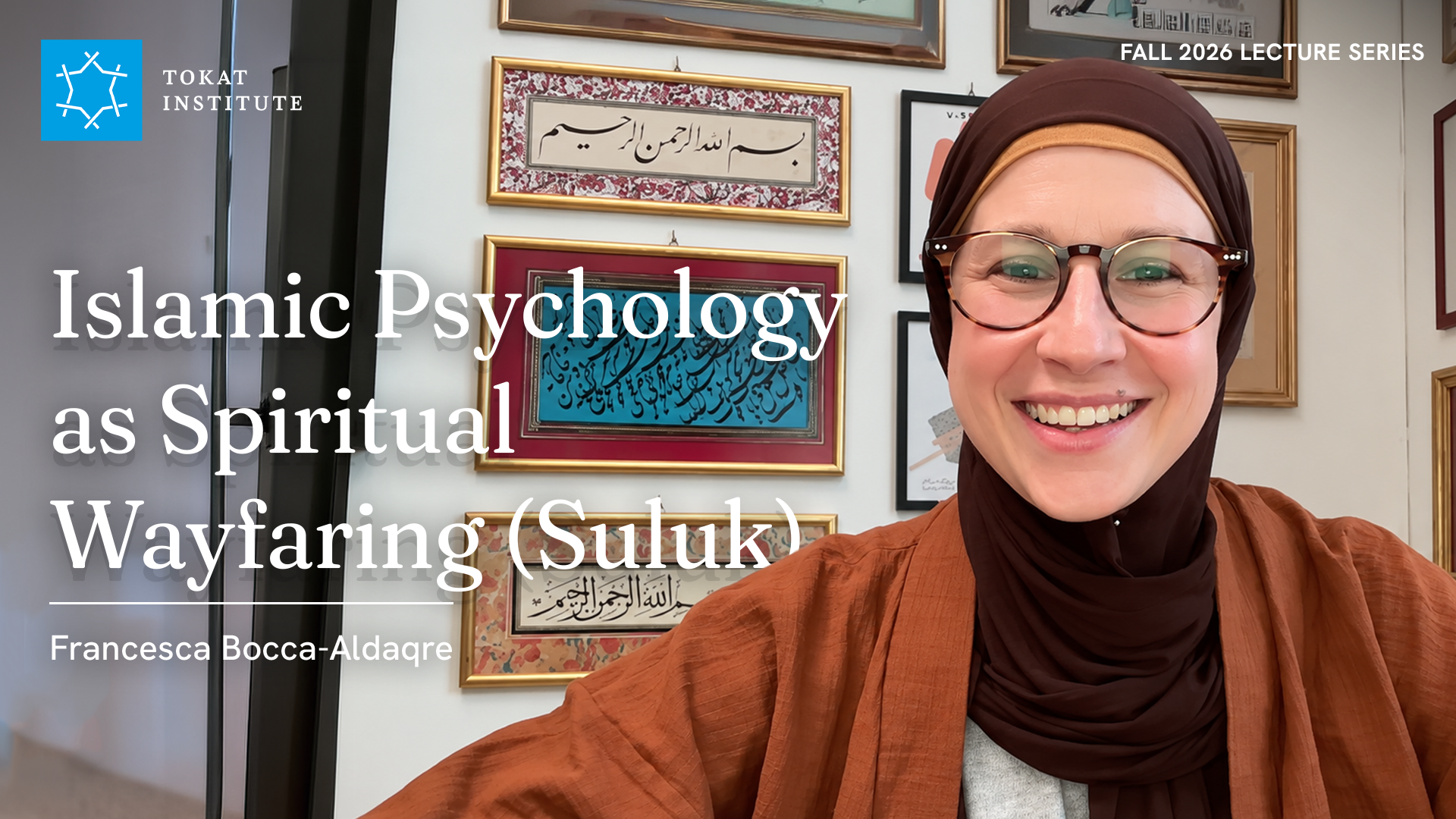
Francesca Bocca-Aldaqre is an Italian theologian, neuroscientist, educator, and writer with a multidisciplinary background that spans Islamic psychology, neuroscience, and Islamic studies. She was born in Piacenza in 1987 and pursued her higher education in Germany, earning both a Master of Science in Neuro‑Cognitive Psychology and a PhD in Systemic Neuroscience from Ludwig‑Maximilians Universität Munich. Additionally, she holds a Diploma in Islamic Psychology from Cambridge Muslim College.
As an author, she has published both poetry and essays. Her major works include “Manifesto dell’Islam Italiano” (2024), “Nietzsche in Paradiso. Vite parallele tra Islam e Occidente” (2021), the “Manuale di Teologia Islamica” co‑authored with Massimo Campanini (2021), “Lezioni sull’Islam – Pratica, credo e spiritualità” (2020), “Sotto il suo passo nascono i fiori. Goethe e l’Islam” with Buttafuoco (2019), and “Un Corano che cammina. Fondamenti di pensiero educativo, didattica e pedagogia islamica” (2018). In poetry, she authored “Non amo chi tramonta” (2020).
Her scholarship bridges Western scientific disciplines and Islamic thought, and she promotes integration through education, literature, and thoughtful reflection on Islam’s role in modern Europe.


Seyyed Hossein Nasr is one of the world’s foremost authorities on Islamic intellectual and spiritual history. The first non-Western philosopher to give the Gifford Lectures, he has devoted sixty years to the recovery and transmission of the Islamic intellectual tradition. At Tokat, he teaches what cannot be found in any other living classroom.
Seyyed Hossein Nasr was born in Tehran in 1933 and educated in the United States, completing a doctorate in the history of science and learning at Harvard in 1958. He returned to Iran to teach at the University of Tehran and became president of the Iranian Academy of Philosophy before leaving the country in 1979.
Nasr’s scholarship spans Islamic philosophy, cosmology, and the history of science — but at its centre is a sustained argument that the Islamic intellectual tradition offers a coherent and living alternative to the dominant assumptions of modern Western thought.
He has written more than fifty books — among them Ideals and Realities of Islam, Knowledge and the Sacred, and Islamic Philosophy from its Origin to the Present. He is one of the few living scholars whose work belongs simultaneously to philosophy, religious studies, and the history of science.
At Tokat, Professor Nasr teaches what cannot be transmitted through books alone: the questions, the method of approach, and the felt sense of what Islamic metaphysics is asking.
An eight-week inquiry into being, knowledge, and existence as understood through the Islamic intellectual tradition — from Ibn Sina and Mulla Sadra to the living present. Not a survey. A sustained encounter with the deepest questions the tradition has asked.
An eight-week inquiry into being, knowledge, and existence as understood through the Islamic intellectual tradition. Not a survey. A sustained encounter with the deepest questions the tradition has asked.
This archive is available to Associate members. Scholar Notes, Deep Dives, and the full lecture library — included at $99 / year.
Become an AssociateThis archive is available to Associate members. Scholar Notes, Deep Dives, and the full lecture library — included at $99 / year.
Become an Associate