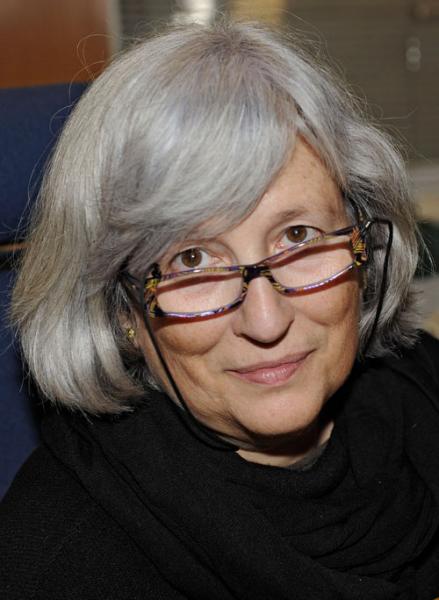
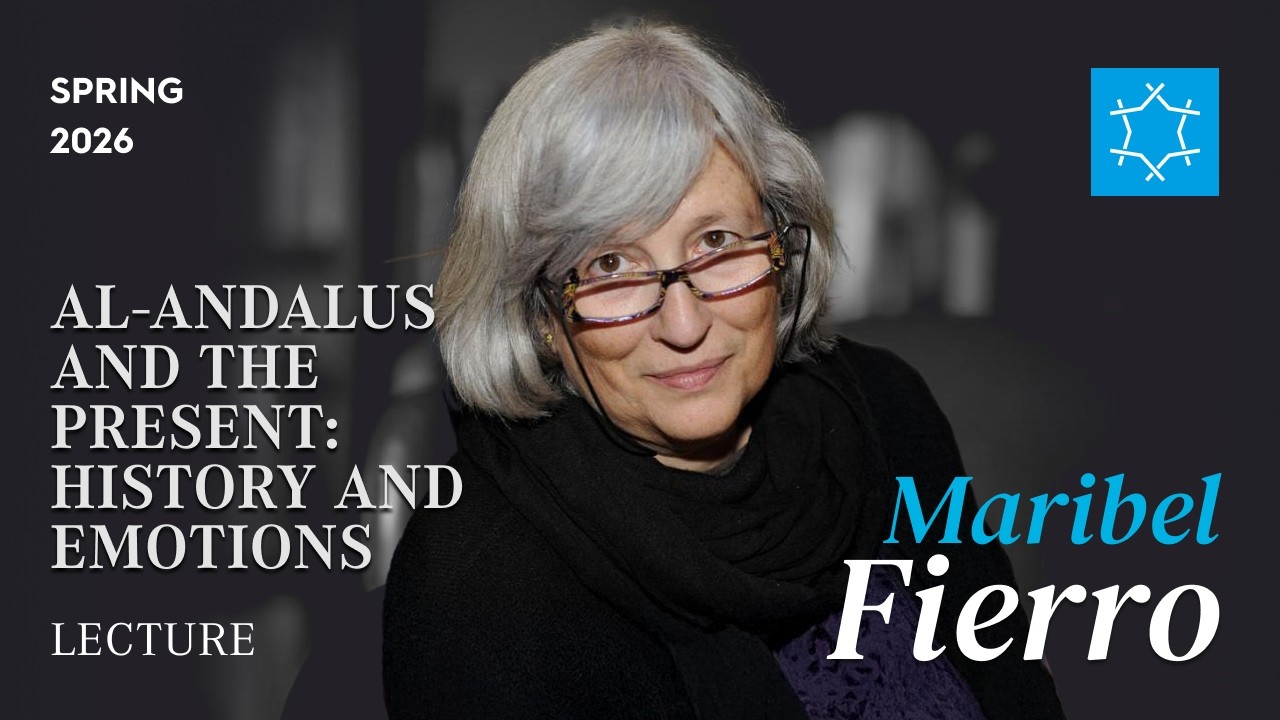
Maribel Fierro
Maribel Fierro is Research Professor at the Institute for the Languages and Cultures of the Mediterranean of the Spanish National Research Council (CSIC) and one of the foremost scholars of the history of Al-Andalus and the Islamic West. Through her extensive research on Islamic Iberia, North Africa, Islamic law, political authority, and intellectual history, she has played a major role in reshaping contemporary understanding of the western regions of the Islamic world and their place within broader Islamic civilization.
Professor Fierro's scholarship focuses on the political and intellectual history of Al-Andalus and North Africa, with particular attention to the formation of religious authority, legal traditions, dynastic power, and the relationship between politics and knowledge. Her work has consistently demonstrated the importance of the Islamic West as a center of intellectual creativity, political innovation, and cultural exchange, challenging narratives that marginalize its role within Islamic history.
A major theme of her research concerns the nature of political legitimacy and religious authority in Islamic societies. Her studies of the Umayyads of Córdoba, the Almohads, and other ruling dynasties have illuminated how claims to power, caliphal authority, and religious reform shaped the historical development of the western Islamic world. Her books on ʿAbd al-Raḥmān III, ʿAbd al-Muʾmin, and the Almohad movement have become foundational contributions to the study of medieval Islamic political thought and state formation.
Professor Fierro has also made significant contributions to the study of Islamic law, orthodoxy and heresy, public violence, and the circulation of knowledge across the Islamic world. Her research explores how legal, theological, and political discourses interacted in the construction of religious communities and public authority. Through studies of travel, scholarly networks, and intellectual exchange, she has highlighted the deep connections linking the Maghrib, Al-Andalus, and the wider Islamic world.
In addition to her monographs, Professor Fierro has edited numerous influential collective volumes that have shaped contemporary scholarship on Islamic history. These include The Routledge Handbook on Muslim Iberia, The Western Islamic World, Eleventh–Eighteenth Centuries (Volume II of The New Cambridge History of Islam), Orthodoxy and Heresy in Islam, The Maghrib in the Mashriq, Public Violence in Islamic Societies, and Rulers as Authors in Islamic Societies. Her editorial work has helped establish new directions for research on political authority, intellectual exchange, and cultural history in Islamic societies.
Professor Fierro has held visiting appointments at leading institutions throughout Europe and North America, including the Universities of Chicago, Hamburg, Leiden, Exeter, Paris-I, Toulouse, and the École des Hautes Études en Sciences Sociales. Her research has been supported by prestigious grants and fellowships from the European Research Council, the Alexander von Humboldt Foundation, and the Spanish Ministry of Education.
At Tokat, she lectures on the history of Al-Andalus and the Islamic West as a vibrant arena of political, intellectual, and cultural creativity, inviting students to explore the societies, institutions, and ideas that shaped one of the most influential regions of the premodern Islamic world.