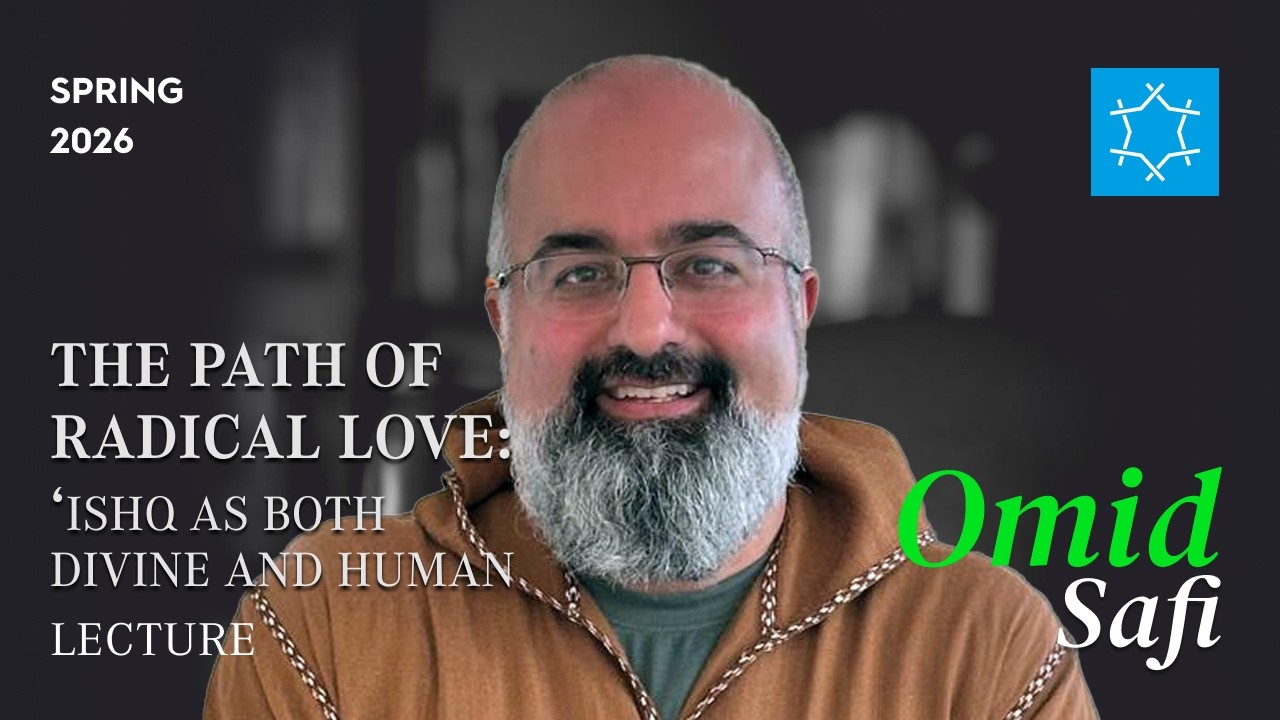
Omid Safi is a scholar of Islamic mysticism (Sufism) as well as contemporary Islamic thought at Duke University. He returned to Duke University in 2014 to lead the Duke Islamic Studies Center, and has served as the Chair of the Study of Islam Section at the American Academy of Religion.
Dr. Safi’s passion for teaching has been recognized through the ten times that he has been nominated for professor of the year awards.
Dr. Safi has published extensively on the foundational sources of Islam and Sufism. His Memories of Muhammad is a biography of the Prophet Muhammad. His most recent book is Radical Love: Teachings from the Islamic Mystical Tradition (published by Yale). His next book is Breathing With God: Spiritual Sayings of Kharaqani (also by Yale), followed by a book on the mystic Rumi from Princeton.
Dr. Safi has been invited by the family of Dr. King to speak at Ebenezer Church on the relevance of Dr. King for today’s America, and has delivered the Martin Luther King keynote in the annual national MLK service.
Dr. Safi often appears as an expert on Islam in the New York Times, Newsweek, Washington Post, PBS, NPR, NBC, BBC, CNN and other outlets. He has a podcast (“Sufi Heart”) at Be Here Now.
In his community-based work, his Illuminated Tours have taken more than 2,500 friends from over twenty countries to Turkey, Morocco, and Umrah journeys since 2002, and he is now offering Illuminated Courses for online offerings on spiritual traditions open to seekers of all backgrounds.

Seyyed Hossein Nasr is one of the world’s foremost authorities on Islamic intellectual and spiritual history. The first non-Western philosopher to give the Gifford Lectures, he has devoted sixty years to the recovery and transmission of the Islamic intellectual tradition. At Tokat, he teaches what cannot be found in any other living classroom.
Seyyed Hossein Nasr was born in Tehran in 1933 and educated in the United States, completing a doctorate in the history of science and learning at Harvard in 1958. He returned to Iran to teach at the University of Tehran and became president of the Iranian Academy of Philosophy before leaving the country in 1979.
Nasr’s scholarship spans Islamic philosophy, cosmology, and the history of science — but at its centre is a sustained argument that the Islamic intellectual tradition offers a coherent and living alternative to the dominant assumptions of modern Western thought.
He has written more than fifty books — among them Ideals and Realities of Islam, Knowledge and the Sacred, and Islamic Philosophy from its Origin to the Present. He is one of the few living scholars whose work belongs simultaneously to philosophy, religious studies, and the history of science.
At Tokat, Professor Nasr teaches what cannot be transmitted through books alone: the questions, the method of approach, and the felt sense of what Islamic metaphysics is asking.
An eight-week inquiry into being, knowledge, and existence as understood through the Islamic intellectual tradition — from Ibn Sina and Mulla Sadra to the living present. Not a survey. A sustained encounter with the deepest questions the tradition has asked.
An eight-week inquiry into being, knowledge, and existence as understood through the Islamic intellectual tradition. Not a survey. A sustained encounter with the deepest questions the tradition has asked.
This archive is available to Associate members. Scholar Notes, Deep Dives, and the full lecture library — included at $99 / year.
Become an AssociateThis archive is available to Associate members. Scholar Notes, Deep Dives, and the full lecture library — included at $99 / year.
Become an Associate