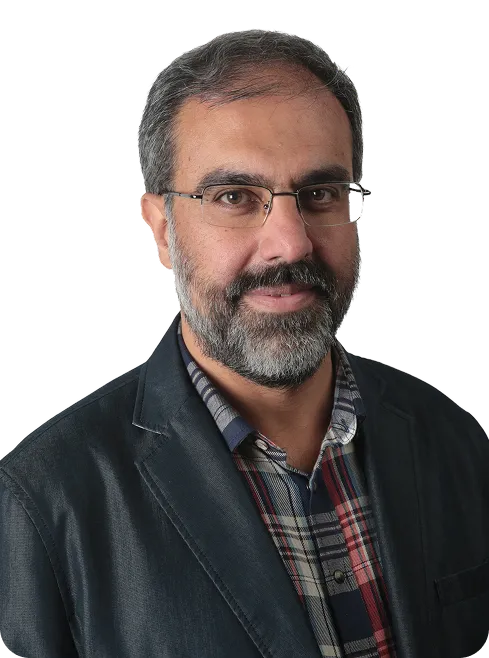
Sebastian Günther is Professor and Chair of Arabic and Islamic Studies at the University of Göttingen and one of the world's foremost scholars of Islamic intellectual history, education, and ethics. Through his extensive research on the transmission of knowledge, the cultivation of virtue, and the humanistic dimensions of Islamic civilization, he has helped reshape contemporary understanding of learning and moral formation in Muslim societies.
Educated in Germany and internationally recognized for his contributions to Arabic and Islamic studies, Professor Günther previously held faculty appointments at the University of Toronto, where he earned tenure and was promoted to Associate Professor, and at Martin Luther University of Halle-Wittenberg. Throughout his career, he has maintained an active international presence through research fellowships and visiting appointments at major institutions including Al-Azhar University, the American University of Beirut, the International Islamic University in Islamabad, the Institute for Advanced Study in Princeton, and New York University Abu Dhabi.
A central focus of Professor Günther’s scholarship is the history of education in Islam and the ways Muslim thinkers understood the relationship between knowledge, ethics, and human development. His research demonstrates that education in the Islamic tradition was never conceived merely as the acquisition of information, but as a process of intellectual refinement, moral cultivation, and spiritual growth. Through studies of educational texts, ethical literature, and classical scholarship, he has illuminated the rich pedagogical traditions that shaped Islamic civilization for centuries.
Professor Günther has also made important contributions to the study of Islamic ethics, Arabic literature, and the broader intellectual history of Islam. His work frequently examines how Muslim scholars addressed questions of virtue, character, wisdom, happiness, and the purpose of learning. In particular, he has highlighted the continuing relevance of classical Islamic educational and ethical traditions for contemporary discussions concerning human flourishing, civic responsibility, and the aims of education.
Among his major publications are Raise and Educate Me: Studies in the Educational and Ethical Discourse of Islam (2023), the two-volume reference work Knowledge and Education in Classical Islam: Religious Learning Between Continuity and Change (2020), and Islamic Ethics as Educational Discourse: Thought and Impact of the Classical Muslim Thinker Miskawayh (d. 1030) (2021). These works have become important contributions to the growing field of Islamic educational thought and ethics.
In addition to his scholarly publications, Professor Günther serves on the editorial boards of numerous academic journals and book series, including Brill’s Islamic History and Civilization. He is also an active participant in international initiatives dedicated to education and human development, including the World Forum Human Education in the Third Millennium. His work consistently emphasizes the importance of integrating intellectual excellence, ethical formation, and human dignity within educational systems.
Professor Günther’s scholarly leadership has been recognized through numerous international honors, including his election in 2025 as an International Honorary Member of the American Academy of Arts and Sciences. Few contemporary scholars have done more to illuminate the educational ideals and ethical aspirations that have shaped Islamic intellectual traditions across history.
At Tokat, he teaches Islamic educational thought as living traditions of wisdom, exploring how Muslim scholars understood the formation of knowledge, character, and human flourishing.



Sebastian Günther is the leading contemporary scholar of Islamic intellectual and educational history. His research explores the ethical, pedagogical, and humanistic dimensions of Islamic civilization, with particular attention to the transmission of knowledge, classical Arabic literature, and the cultivation of virtue through education. Through a distinguished body of scholarship spanning Islamic ethics, educational thought, and intellectual history, Professor Günther has significantly advanced contemporary understanding of how Muslim societies conceived of learning, character formation, and human flourishing.
Sebastian Günther is Professor and Chair of Arabic and Islamic Studies at the University of Göttingen and one of the world's foremost scholars of Islamic intellectual history, education, and ethics. Through his extensive research on the transmission of knowledge, the cultivation of virtue, and the humanistic dimensions of Islamic civilization, he has helped reshape contemporary understanding of learning and moral formation in Muslim societies.
Educated in Germany and internationally recognized for his contributions to Arabic and Islamic studies, Professor Günther previously held faculty appointments at the University of Toronto, where he earned tenure and was promoted to Associate Professor, and at Martin Luther University of Halle-Wittenberg. Throughout his career, he has maintained an active international presence through research fellowships and visiting appointments at major institutions including Al-Azhar University, the American University of Beirut, the International Islamic University in Islamabad, the Institute for Advanced Study in Princeton, and New York University Abu Dhabi.
A central focus of Professor Günther’s scholarship is the history of education in Islam and the ways Muslim thinkers understood the relationship between knowledge, ethics, and human development. His research demonstrates that education in the Islamic tradition was never conceived merely as the acquisition of information, but as a process of intellectual refinement, moral cultivation, and spiritual growth. Through studies of educational texts, ethical literature, and classical scholarship, he has illuminated the rich pedagogical traditions that shaped Islamic civilization for centuries.
Professor Günther has also made important contributions to the study of Islamic ethics, Arabic literature, and the broader intellectual history of Islam. His work frequently examines how Muslim scholars addressed questions of virtue, character, wisdom, happiness, and the purpose of learning. In particular, he has highlighted the continuing relevance of classical Islamic educational and ethical traditions for contemporary discussions concerning human flourishing, civic responsibility, and the aims of education.
Among his major publications are Raise and Educate Me: Studies in the Educational and Ethical Discourse of Islam (2023), the two-volume reference work Knowledge and Education in Classical Islam: Religious Learning Between Continuity and Change (2020), and Islamic Ethics as Educational Discourse: Thought and Impact of the Classical Muslim Thinker Miskawayh (d. 1030) (2021). These works have become important contributions to the growing field of Islamic educational thought and ethics.
In addition to his scholarly publications, Professor Günther serves on the editorial boards of numerous academic journals and book series, including Brill’s Islamic History and Civilization. He is also an active participant in international initiatives dedicated to education and human development, including the World Forum Human Education in the Third Millennium. His work consistently emphasizes the importance of integrating intellectual excellence, ethical formation, and human dignity within educational systems.
Professor Günther’s scholarly leadership has been recognized through numerous international honors, including his election in 2025 as an International Honorary Member of the American Academy of Arts and Sciences. Few contemporary scholars have done more to illuminate the educational ideals and ethical aspirations that have shaped Islamic intellectual traditions across history.
At Tokat, he teaches Islamic educational thought as living traditions of wisdom, exploring how Muslim scholars understood the formation of knowledge, character, and human flourishing.