BACK TO ALL SERIES
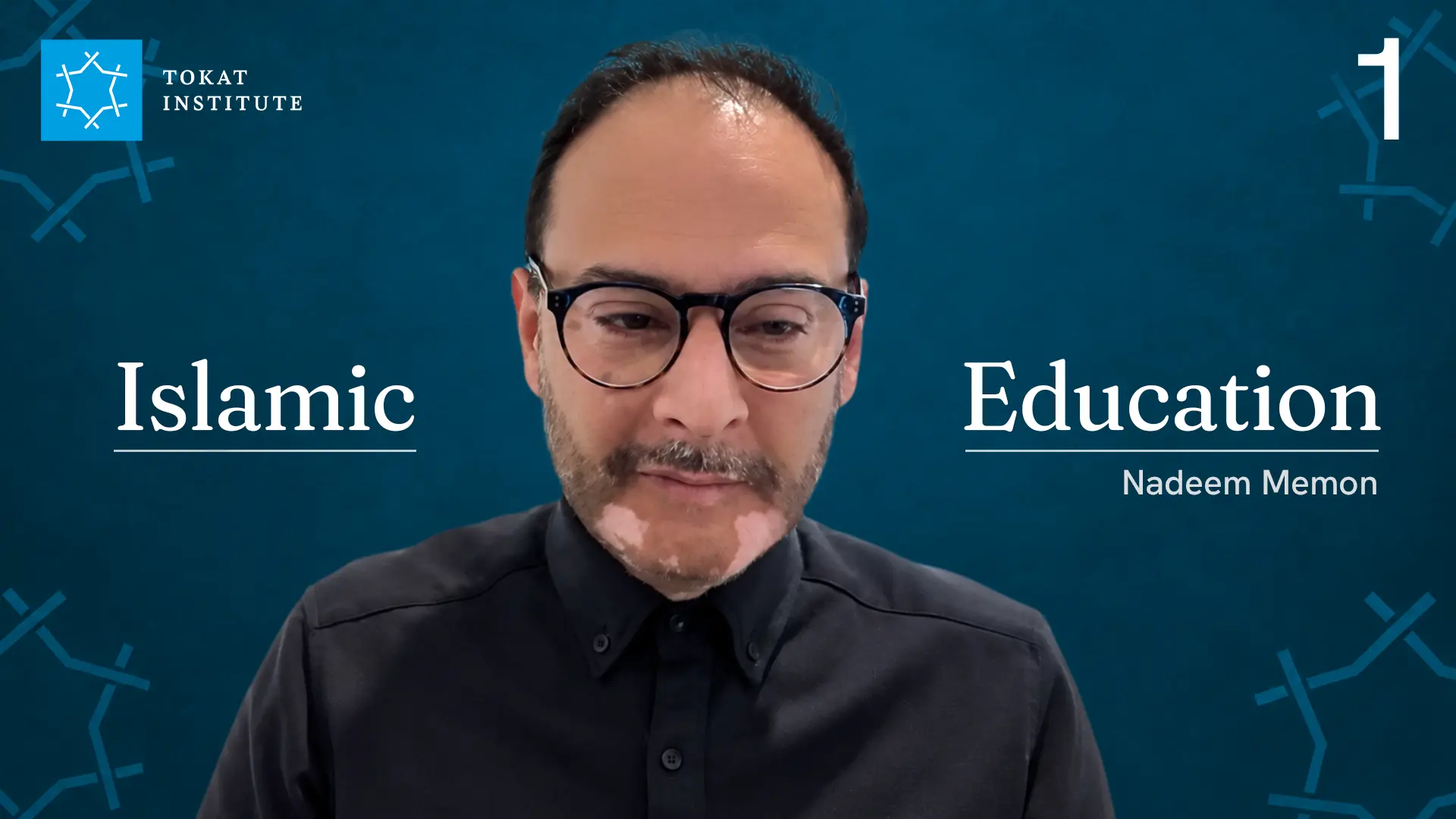
Islamic Education
Prof. Nadeem Memon
Explore the Islamic vision of education as the cultivation of knowledge, character, wisdom, and excellence.
ONLINE COURSE
1 Hour
LECTURES
1 Session
STREAM
PRE-RECORDED
This course explores Islamic educational thought as a living intellectual tradition with enduring significance for contemporary educational philosophy and practice. Part I approaches the classical foundations through four connected questions: Why, What, How, and Who? Why is a distinctively Islamic educational philosophy needed? What understandings of knowledge, reason, and truth make education Islamic? How have Muslim thinkers understood teaching and learning? And who is education ultimately seeking to cultivate? Drawing particularly on Philosophies of Islamic Education: Historical Perspectives and Emerging Discourses (Memon & Zaman, 2016), students engage diverse perspectives within the Islamic intellectual tradition, including theology, reason, knowledge, spirituality, adab, and human formation.
Part II turns to contemporary Islamic schooling through four turns towards renewal: the Critical Turn, the Inward Turn and Turn Back, the Reflexive Turn, and the Pedagogical Turn. Students examine the philosophical assumptions embedded in contemporary schooling, consider how renewal can reconnect with the Islamic educational tradition, explore how educators and school communities can learn from their own contexts, and investigate how worldview can inform teaching, learning, and school practice.
Together, the eight sessions move from the philosophical foundations of Islamic education to the work of renewing contemporary schooling. The course invites students to move beyond understanding Islamic education as the addition of religious content or values to conventional schooling, and instead to consider how an Islamic worldview can inform a coherent educational philosophy—one that shapes the purposes of education, understandings of knowledge, pedagogical practice, and the formation of the educated person. The four turns are a course-level adaptation of the Five Turns framework, bringing the Inward Turn and Turn Back together for this four-session sequence.
Learning Aims
By the end of the course, students should be able to:
• Explain key philosophical questions and concepts within Islamic educational thought.
• Critically examine relationships between worldview, knowledge, spirituality, human formation and educational practice.
• Engage with diverse perspectives within the Islamic intellectual tradition.
• Analyse the philosophical assumptions informing contemporary schooling.
• Identify implications of Islamic educational thought for the renewal of teaching, learning and educational institutions.
Target Audience and Prerequisites
This course is designed for students, academics, and anyone interested in engaging seriously with the intellectual traditions of Islamic civilization. No prior academic background in the subject is required unless otherwise specified. Participants need only bring intellectual curiosity, openness to new ideas, and a willingness to engage thoughtfully with the course materials and discussions.
Texts
Memon, N. & Zaman, M. (Eds.), (2016) Philosophies of Islamic Education: Historical Perspectives and Emerging Discourses. Oxford UK: Routledge
Memon, N. A., Alhashmi, M. & Abdalla, M. (Eds). (2021) Curriculum Renewal for Islamic Education: Critical perspectives on teaching Islam in primary and secondary schools. Oxford UK: Routledge
Memon, N. A., Abdalla, M. & Chown, D. (2026) Islamic Schools of Distinction: Learning and Teaching Rooted in the Islamic Worldview. Palgrave Macmillan
Readings will be mainly selected from the texts. Only one reading is required per session. Additional readings that have been provided are optional.
Part I Classical Foundations
October 27
What is Islamic about Islamic Education?
Readings:
- Philosophies of Islamic Education – Introduction pp1-16 by Mujadad Zaman
- Ahmed, F., & Chowdhury, S. (2024). Rethinking contemporary schooling in Muslim contexts: An Islamic conceptual framework for reconstructing K-12 education. Educational Philosophy and Theory, https://doi.org/10.1080/00131857.2024.2411325
November 3
Questioning, Criticality, and Haqiqah - Al-Ghazali, Naquib Al-Attas and Vygotsky
Readings:
- Ahmed, F., and Lawson, I. (2016). Teaching Islam: Are there pedagogical limits to critical inquiry? pp236-252 In N. Memon and M. Zaman (Eds.), Philosophies of Islamic Education: Historical Perspectives and Emerging Discourses. Oxford UK: Routledge
- The Deliverance from Error – Abu Hamid al-Ghazali
November 10
Agency, Structure and Justice - Ibn Tufayl, Rousseau and Robinson Crusoe
Readings (read a few pages from each or summaries):
- Hayy ibn Yaqzan – Ibn Tufayl
- Emile – Jean-Jacques Rousseau
- Robinson Crusoe – Daniel Defoe
November 17
Relationships, Relationality and Ma’rifa
Readings:
- Ahmed, F. (2021). Devising an Islamic Approach to Learning and Teaching through Hadith Jibra’il: Reorienting ourselves to education from within and Islamic worldview. pp199-212.
- Zaman, M. (2021). Sitting, Debating, Memorising and Discipleship: Considering historical patterns of Islamic Pedagogy. pp213-227.
Part II Contemporary Implications
November 24
Beginning with Critique: Unpacking Philosophical Commitments in Contemporary Schooling
Readings:
Abdalla, M.; Chown, D.; and Memon, N. (2026) “Chapter 2: From Worldview to Praxis: Islamic Schooling Renewal through Design and Distinction.”
December 1
Inward Turn: What Reconnecting with Education in the Islamic Tradition Entails
Readings:
Memon, N.A.; Abdalla, M.; Chown, D. Laying Foundations for Islamic Teacher Education. Educ. Sci. 2024, 14, 1046. https://doi.org/10.3390/educsci14101046
December 8
Case Studies of Renewal: Islamic Schools Rethinking Practice Top Down and Bottom Up
Readings:
Memon, N. A., Abdalla, M. & Chown, D. (2026) Islamic Schools of Distinction: Learning and Teaching Rooted in the Islamic Worldview. Palgrave Macmillan (Parts II and III)
December 15
Navigating Barriers: Maintaining Momentum with Deep Philosophical Commitments
Readings:
Memon, N. A., Abdalla, M. & Chown, D. (2026) Islamic Schools of Distinction: Learning and Teaching Rooted in the Islamic Worldview. Palgrave Macmillan (Part IV)
Instructor Bio

Nadeem Memon
