BACK TO ALL SERIES
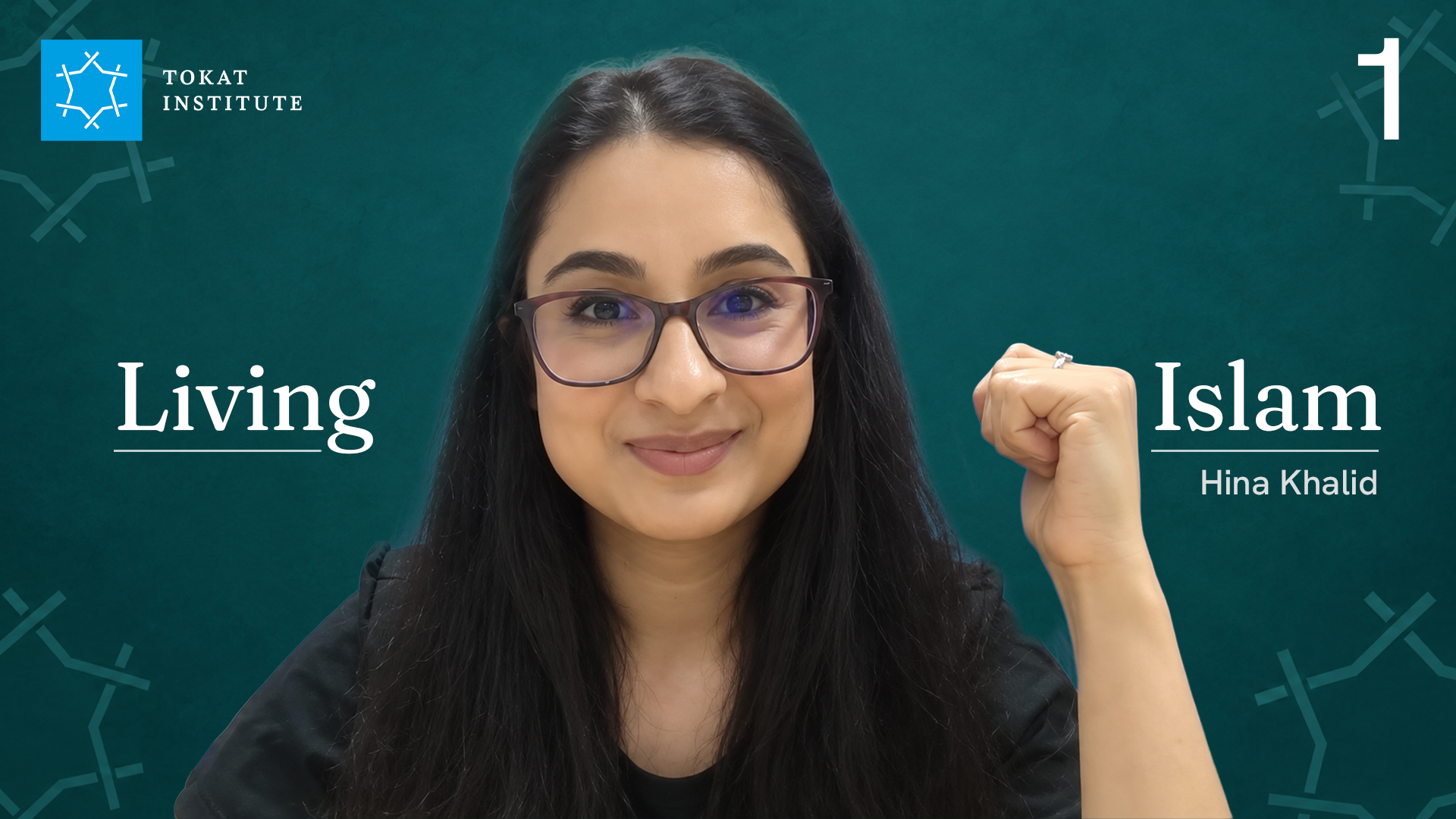
Living Islam
Dr. Hina Khalid
How Islamic spiritual teachings can be meaningfully integrated into daily life, cultivating greater presence, purpose, and inner transformation through everyday actions
ONLINE COURSE
1,5 hours
LECTURES
1 session
STREAM
PRE-RECORDED
This course offers an immersive exploration of the everyday acts that shape, nurture, and sustain our relationship with the divine. Centering our gaze on the sensory “stuff” of daily life, we will consider how inner beauty is forged not despite but through the body and its myriad created (and creative) gifts. Each week, we take up one embodied practice or faculty and unfurl its spiritual depth, reflecting on what it might disclose about ourselves and about the God who has supremely beautified our forms (Q 40:64; Q 64:3). By illuminating the Divine Hand at work in our every day, the hope is that we may bear active, attentive witness to the proximate splendours of our material world, and thus become better readers of the quotidian signs (āyāt) by which we live, move, and have our being.
Texts
A range of articles relevant to each week’s theme(s). See below.
Suggested Readings:
- Martin Nguyen, Modern Muslim Theology: Engaging God and the World
with Faith and Imagination (Bloomsbury, 2018).
- Atif Khalil, “Sufism and Qurʾānic Ethics,” in Routledge Handbook of
Sufism, ed. Lloyd Ridgeon (Routledge, 2020), pp. 159–171.
- Atif Khalil, “The Embodiment of Gratitude (Shukr) in Sufi Ethics,” Studia
Islamica 111 (2016): 159–178.
- Rowan Williams, Being Human: Bodies, Minds, Persons (SPCK, 2018).
(Note: though much of this book is written from a Christian perspective, its
themes and insights are applicable to any sustained religious
consideration of what it means to be human).
Texts
A range of articles relevant to each week’s theme(s). See below.
Suggested Readings:
- Martin Nguyen, Modern Muslim Theology: Engaging God and the World
with Faith and Imagination (Bloomsbury, 2018).
- Atif Khalil, “Sufism and Qurʾānic Ethics,” in Routledge Handbook of
Sufism, ed. Lloyd Ridgeon (Routledge, 2020), pp. 159–171.
- Atif Khalil, “The Embodiment of Gratitude (Shukr) in Sufi Ethics,” Studia
Islamica 111 (2016): 159–178.
- Rowan Williams, Being Human: Bodies, Minds, Persons (SPCK, 2018).
(Note: though much of this book is written from a Christian perspective, its
themes and insights are applicable to any sustained religious
consideration of what it means to be human).
Class 1
Theology as Praxis: On See(k)ing God in All Things
Readings:
- Martin Nguyen, “A Case for Thinking and Living Theologically: Faith,
Imagination, and Malcolm X,” Ḥāshiya 1 (2025–2026).
- Munjed M. Murad, “Sufi Views of Nature,” in Handbook of Sufi Studies
Volume 2: Sufi Cosmology, ed. Christian Lange and Alexander Knysh
(Brill, 2022), pp. 189–204.
Class 2
On Walking
Readings:
- Seyyed Hossein Nasr, “The Wisdom of the Body,” in Seyyed Hossein
Nasr, Religion and the Order of Nature (OUP, 1996), pp. 235–269.
- Hina Khalid, “What Walking Can Do For Our Souls,” Renovatio 7.1 (2023).
https://renovatio.zaytuna.edu/article/what-walking-can-do-for-our-souls
Class 3
On Speaking
Readings:
- Hina Khalid, “The Power of Human Speech,” Renovatio 9.2 (2025).
https://renovatio.zaytuna.edu/article/the-power-of-human-speech
Class 4
On Looking
Readings:
- Richard McGregor, “Seeing is Believing: Sufi Vision and the Formation of
the Ethical Subject,” in Mysticism and Ethics in Islam, ed. Bilal Orfali, Atif
Khalil, and Mohammed Rustom (AUB Press, 2022), pp. 181–196.
Class 5
On Listening
Readings:
- Christian Lange, “Ibn Qayyim al-Jawziyya (d. 751/1350) on the Virtues of
the Eye and the Ear,” in Islamic Sensory History, Volume 2: 600–1500, ed.
Christian Lange and Adam Bursi (Brill, 2024), pp. 389–400.
An optional fun reading:
- Tanvir Ahmed and Shahzad Bashir, “Abū l-Majd Tabrīzī (d. after
736/1336) on the Debate between the Ear and the Eye,” in Islamic
Sensory History, Volume 2: 600–1500, ed. Christian Lange and Adam
Bursi (Brill, 2024), pp. 159–169.
Class 6
On Caregiving
Readings:
- Mohammed Rustom, “On Listening: Hearing God’s Voice in the Face of
Suffering,” Sacred Web 45.
- Mona Siddiqui, “Introduction,” in Mona Siddiqui, Hospitality and Islam:
Welcoming in God's Name (Yale University Press, 2015).
Class 7
On Smells, Smiles, and Tears
Readings:
- Adam Bursi and Anya King, “Al-Kindī (d. after 256/870) on the Effects of
Music, Colors, and Scents,” in Islamic Sensory History, Volume 2:
600–1500, ed. Christian Lange and Adam Bursi (Brill, 2024), pp. 209–219.
- William Chittick, “Weeping in Classical Sufism,” in Holy Tears: Weeping in
the Religious Imagination (Princeton University Press, 2005), pp.
132–144.
Instructor Bio

Hina Khalid