Islamic Education
Explore the Islamic vision of education as the cultivation of knowledge, character, wisdom, and excellence.
A syllabus, not a playlist.
Description
This course invites students into a sustained and searching engagement with the intellectual heritage of Islamic education, as a living tradition with urgent implications for how we think, teach, and learn today. The course unfolds in two interconnected parts. The first, led by Dr. Farah Ahmed, returns to the classical foundations of Islamic educational thought. Students will grapple with foundational questions including what makes education distinctively Islamic? They will explore how towering figures such as al-Ghazali and Syed Muhammad Naquib al-Attas understood the relationship between questioning, criticality, and the pursuit of haqiqa (truth or reality). Drawing on Ibn Tufayl’s philosophical novel alongside Rousseau’s Émile, students will explore enduring tensions between human agency and social structure in the formation of the educated self. The unit culminates in a rich examination of educational relationships: between teacher and learner, self and Divine, and self and world, as the ground of ma’rifa (gnosis, or intimate knowing).
The second part, led by Dr Nadeem Memon, bridges these classical insights into the lived realities of contemporary Islamic schools. Students will develop critical tools for examining the philosophical assumptions embedded in mainstream educational systems, before turning inward to ask what a genuine reconnection with the Islamic educational tradition actually demands of educators and institutions. Through case studies of renewal in Islamic schools, students will encounter communities rethinking practice from both above and below. The course closes with an honest reckoning with the barriers practitioners face when trying to sustain deep philosophical commitments in institutional contexts. Together, the two parts offer students a rigorous, spiritually grounded, and practically oriented introduction to Islamic educational thought.
Texts
Memon, N. & Zaman, M. (Eds.), (2016) Philosophies of Islamic Education: Historical Perspectives and Emerging Discourses. Oxford UK: Routledge
Memon, N. A., Alhashmi, M. & Abdalla, M. (Eds). (2021) Curriculum Renewal for Islamic Education: Critical perspectives on teaching Islam in primary and secondary schools. Oxford UK: Routledge
Memon, N. A., Abdalla, M. & Chown, D. (2026) Islamic Schools of Distinction: Learning and Teaching Rooted in the Islamic Worldview. Palgrave Macmillan
Readings will be mainly selected from the texts. Only one reading is required per session. Additional readings that have been provided are optional.
Schedule of Meetings
Part I Classical Foundations
October 27 - Farah Ahmed
What is Islamic about Islamic Education?
Readings:
- Philosophies of Islamic Education – Introduction pp1-16 by Mujadad Zaman
- Ahmed, F., & Chowdhury, S. (2024). Rethinking contemporary schooling in Muslim contexts: An Islamic conceptual framework for reconstructing K-12 education. Educational Philosophy and Theory, https://doi.org/10.1080/00131857.2024.2411325
November 3 - Farah Ahmed
Questioning, Criticality, and Haqiqah - Al-Ghazali, Naquib Al-Attas and Vygotsky
Readings:
- Ahmed, F., and Lawson, I. (2016). Teaching Islam: Are there pedagogical limits to critical inquiry? pp236-252 In N. Memon and M. Zaman (Eds.), Philosophies of Islamic Education: Historical Perspectives and Emerging Discourses. Oxford UK: Routledge
- The Deliverance from Error – Abu Hamid al-Ghazali
November 10 - Farah Ahmed
Agency, Structure and Justice - Ibn Tufayl, Rousseau and Robinson Crusoe
Readings (read a few pages from each or summaries):
- Hayy ibn Yaqzan – Ibn Tufayl
- Emile – Jean-Jacques Rousseau
- Robinson Crusoe – Daniel Defoe
November 17 - Farah Ahmed
Relationships, Relationality and Ma’rifa
Readings:
- Ahmed, F. (2021). Devising an Islamic Approach to Learning and Teaching through Hadith Jibra’il: Reorienting ourselves to education from within and Islamic worldview. pp199-212.
- Zaman, M. (2021). Sitting, Debating, Memorising and Discipleship: Considering historical patterns of Islamic Pedagogy. pp213-227.
Part II Contemporary Implications
November 24 – Nadeem Memon
Beginning with Critique: Unpacking Philosophical Commitments in Contemporary Schooling
Readings:
Abdalla, M.; Chown, D.; and Memon, N. (2026) “Chapter 2: From Worldview to Praxis: Islamic Schooling Renewal through Design and Distinction.”
December 1 – Nadeem Memon
Inward Turn: What Reconnecting with Education in the Islamic Tradition Entails
Readings:
Memon, N.A.; Abdalla, M.; Chown, D. Laying Foundations for Islamic Teacher Education. Educ. Sci. 2024, 14, 1046. https://doi.org/10.3390/educsci14101046
December 8 – Nadeem Memon
Case Studies of Renewal: Islamic Schools Rethinking Practice Top Down and Bottom Up
Readings:
Memon, N. A., Abdalla, M. & Chown, D. (2026) Islamic Schools of Distinction: Learning and Teaching Rooted in the Islamic Worldview. Palgrave Macmillan (Parts II and III)
December 15 – Nadeem Memon
Navigating Barriers: Maintaining Momentum with Deep Philosophical Commitments
Readings:
Memon, N. A., Abdalla, M. & Chown, D. (2026) Islamic Schools of Distinction: Learning and Teaching Rooted in the Islamic Worldview. Palgrave Macmillan (Part IV)
A working command of the vocabulary of Islamic metaphysics — wujūd, māhiyya, the gradation of being — used precisely, not loosely.
The capacity to read primary texts of Ibn Sīnā and Mullā Ṣadrā with comprehension rather than reverence alone.
An understanding of why the tradition treats metaphysics as the science of realities — and what that claim asks of the knower.
Direct exchange with Professor Nasr in open Q&A after every session — the part no book can replace.
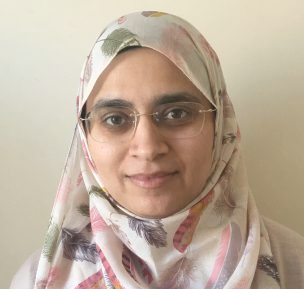
Farah Ahmed is Assistant Research Professor in the Faculty of Education and Research Fellow at Hughes Hall, University of Cambridge.

Nadeem Memon is Associate Professor at the Centre for Islamic Thought and Education (CITE) at the University of South Australia (UniSA).