Medicine and the Sacred in Islam
The syllabus.
Description
This course explores the rich interplay between healing, spirituality, and religious thought in the Islamic tradition by examining how conceptions of health, illness, and treatment are rooted in Islamic cosmology, theology, Sufism, and ethics. We will delve into the historical and philosophical foundations of Prophetic Medicine (al-ṭibb al-nabawī), Greco-Islamic humoral theory, and Sufi approaches to spiritual healing, investigating how Islamic conceptions of the sacred inform medical practice and the pursuit of human well-being.
Texts
Ali, “Reading the Soul”
Chishti, , The Book of Sufi Healing
Nasr, Islamic Science: An Illustrated Study
Nasr, An Introduction to Islamic Cosmological Doctrines
Pormann and Savage-Smith, Medieval Islamic Medicine
Schedule of Meetings & Readings
November 4
Topic: A Brief History of Islamic Medicine
Readings: Pormann and Savage-Smith, Medieval Islamic Medicine, 6–40
November 11
Topic: Sacred Foundations of Medicine
Readings: Nasr, Islamic Science, 153–192
November 18
Topic: Islamic Cosmology and Human Flourishing
Readings: Nasr, An Introduction to Islamic Cosmological Doctrines, 44–66
November 25
Topic: Spiritual Perspectives on Health
Readings: G.M. Chishti, The Book of Sufi Healing, 141-161
December 2
Topic: Diagnosis and the Spiritual Physician
Readings: Ali, “Reading the Soul”
December 9
Topic: Greco-Islamic Medicine: Theory and Practice
Readings: Pormann and Savage-Smith, Medieval Islamic Medicine, chapter 2
A working command of the vocabulary of Islamic metaphysics — wujūd, māhiyya, the gradation of being — used precisely, not loosely.
The capacity to read primary texts of Ibn Sīnā and Mullā Ṣadrā with comprehension rather than reverence alone.
An understanding of why the tradition treats metaphysics as the science of realities — and what that claim asks of the knower.
Direct exchange with Professor Nasr in open Q&A after every session — the part no book can replace.
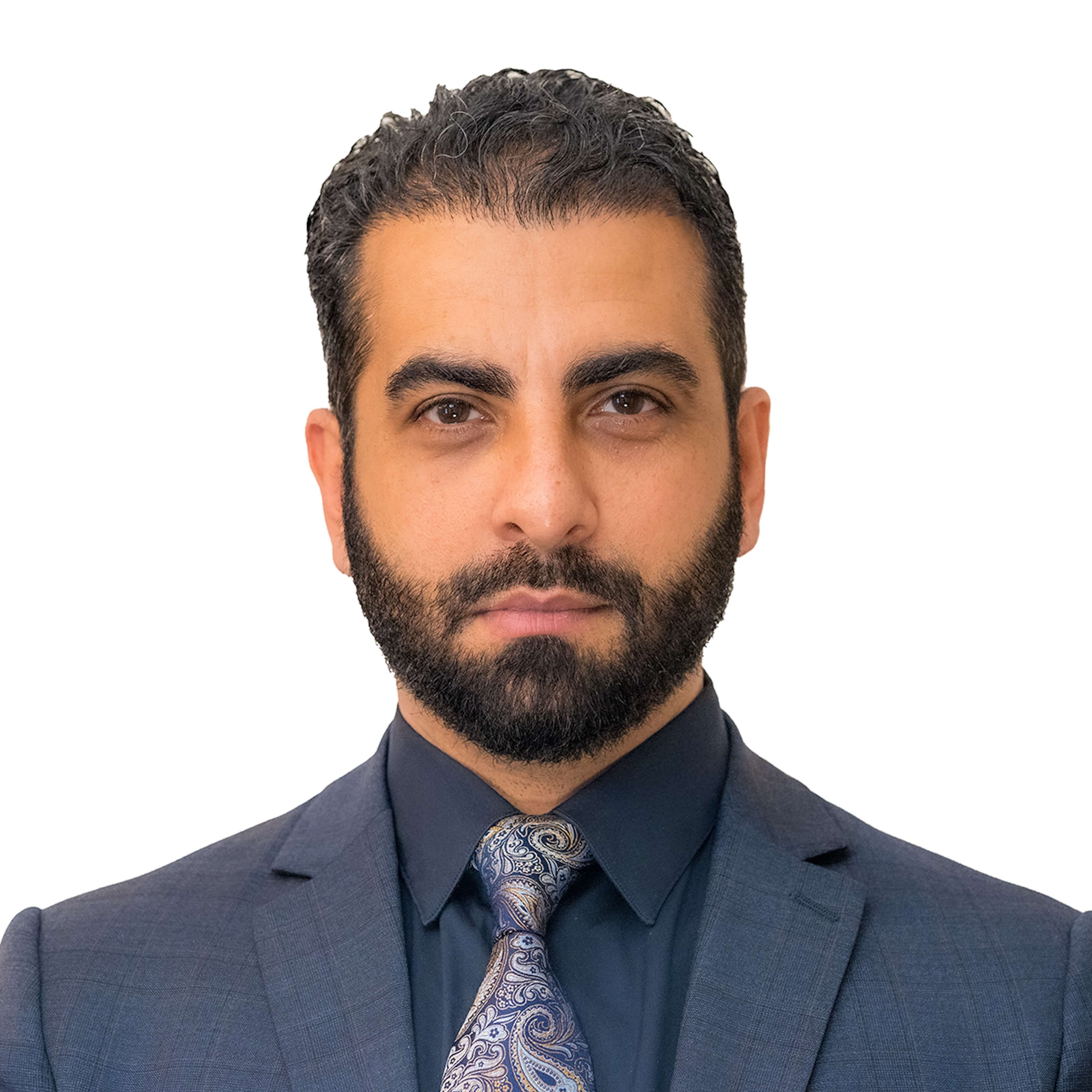
Associate Professor of Islamic studies, specializing in Sufism, philosophy, and ethics
In their own words.
The most valuable aspect of the course was:
“Discovering that Islam is so much deeper than I thought it was. I've been searching for the longest time for something within Islam that was intellectually satisfying… I really hope you'll do more of these courses!”
“Prof. Rustom, with his cheerful manner and fluent expression, made even difficult concepts understandable in simple language.”
"The most valuable aspect of the course for me was understanding how Islamic teachings integrate spiritual, emotional, and physical healing. It helped me see health not just as a medical condition, but as a holistic balance rooted in faith, ethics, and compassion."
“Studying with Professor Chittick was deeply transformative and an immense privilege.”
“This was a wonderful, intellectually stimulating course! I especially appreciated the interactions with other students and Dr. Faruque’s responses to my questions, as well as the care taken to accurately present alternative viewpoints.”
The thing I liked about this most was:
“Its profound exploration of the spiritual and intellectual foundations of reality in Islam—particularly how metaphysical principles connect the Divine, cosmos, and human soul.”
“Very pleasurable to hear God spoken of in the context of an academic frame.”
"Thank you for sharing your knowledge and for the positive influence you've had in my life and the lives of those around me. Your lectures continue to inspire me to explore alternative paths and to support others in their healing journeys."
“It was a great honor and privilege for me to be able to attend Professor Chittick’s class. His mastery and knowledge of the subject of cosmology made the class very interesting.”
Professor Faruque’s course marked a shift from viewing AI as a technical challenge to an ontological one. In an era where “Dataism” threatens to reduce the human soul to a series of algorithms, this course provided a vital intellectual defense of the anthropocosmic self. Professor Faruque brilliantly articulated that while AI can process information, it cannot embody knowledge as a “mode of being.”
“The most valuable aspect of this course for me was gaining a deeper understanding of the foundations and significance of Muslim metaphysics.”
"The course provided a powerful argument in support of alternative healing through holistically making the learners identify with the entirety of life than just material and physical form."
“I felt transported to a different realm during every class, which almost never happens in an academic course. My heart and intellect were both fully engaged. This was due to Professor Chittick's deep knowledge, mastery/love for the subject, and exceptional skills as an orator.”
“This course needs to be translated into other languages spoken in the Muslim world and made more accessible to those audiences.”
“I’m very grateful to attend his astonishing lectures this fall initiated by the Tokat Institute. Barakallah.”
“I have greatly benefited from the alternative approaches to healing and well-being that your lectures provide. Your insights have opened my eyes to the deeper connections between mind, body, and spirit.”
“The most valuable aspect of this course was that Professor Chittick presented Islamic cosmology on its own terms rather than through a diluted Western philosophical lens.”
“This course helped me find answers to many questions that we need to address now and in the near future. Dr. Faruque delivered the course in a highly credible and professional manner.”
“Clarified my understanding of what Islamic metaphysics is, which I hadn’t understood, and the destructive influence of empiricism and related modern ideas/mindsets. This is a very freeing thing!”
“Very happy with the course and I hope there will be more similar courses in the future.”
“Dr. Chittick's presence and vast knowledge of the subject is invaluable.”
“The instructor’s openness to welcoming questions, critiques, and additions was what truly made the course engaging and valuable. The instructor's efforts and knowledge are undoubtedly appreciated.”
“The most valuable aspect of this course was the presence, wisdom, experiences, and discourses of beloved Mohammed Rustom. Following that is the amazing book he has written. What a gem. Great translations. Organized beautifully. The third aspect is the community of beloveds who joined, shared, and contributed with their presences and questions.”
“In this course Professor Chittick offered us a compact and stimulating presentation of Islamic cosmology. His lectures were well-informed and gave us a clear window into the basic concepts related to the field.”
“The themes covered, the resources (articles, books, and lecture slides) shared, and the thought-provoking lectures were all deeply enriching.”
“Absolutely amazing! please offer more of the same! Please!”
“The depth of reflection that was nurtured in the course was very helpful. An excellent course!”
“Your insights and scholarship have tremendously enriched my understanding of the subject. I have found your teaching style to be both informative and inspiring, and I appreciate the effort you put into making complex topics accessible.”
“The way the epistemic foundations of AI were expounded upon helped one see the trajectory of how we have arrived at this point, and how AI is a result and manifestation of this convoluted way of understanding consciousness, humanity, God, nature, and existence. I am grateful to Professor Faruque for sharing his views and perspectives on this topic, as well as his knowledge, which spans technology, religion, and spirituality.”
“I can’t overstate how amazing your class was and its impact on me. ‘Ayn Al-Qudāt is now a household name in our family. My oldest daughter and I would read passages from Inrushes of the Heart (incredible title), many of which are both beautiful and thought-provoking.”
“I would highly recommend it to others.”