Masterpieces of Arabic Literature
Read and appreciate some of the greatest works of Arabic literature that have shaped intellectual and cultural life for centuries.
The syllabus.
Course Description
Arabic literature is one of the longest and richest literary traditions in the world. It stretches without interruption from the odes of pre-Islamic Arabia in the sixth century to the present day, and for most of that time it was the literary language of an empire and a civilization that reached from Spain to Central Asia. This course introduces some of the greatest works of this tradition, in translation, to readers who wish to engage with them seriously. We read poetry and prose from the pre-Islamic, Umayyad, and Abbasid periods and beyond: the heroic ode of the desert, the Qurʾān as a literary event, the elegy and the love lyric, wine poetry in its libertine and mystical forms, the animal fables and essays that founded Arabic prose, the trickster tales of the maqāmāt, and the travel narratives that carried Arab writers to China, India, and the Volga. Each week is built around a close reading of one or two works, placed in their historical and cultural setting, with attention to genre, imagery, and the literary conventions that made the tradition cohere.
Target Audience and Prerequisites
None. The course is open to students, academics, and general readers.
How the Course Works
Each session combines a lecture with discussion. In the first hour I introduce the work, its author, and its world, and we read passages together closely; the remaining time is reserved for questions and conversation. Short passages will be shown in the original Arabic alongside the translation, so that participants who read Arabic can follow the sound and texture of the text, but the course does not assume any Arabic.
There are no written assignments. Participants are encouraged to read the primary texts listed under each week before the session (typically thirty to fifty pages), since the sessions are most rewarding when the texts are fresh in mind. The optional readings are for those who wish to go further; they are not required.
Most of the primary texts are drawn from the Library of Arabic Literature (New York University Press), a series of bilingual editions and translations of classical Arabic works, and from Geert Jan van Gelder’s anthology Classical Arabic Literature (2013). Readings that are not easily available will be provided to participants before the session.
Weekly Schedule
Week 1. The Ode in the Desert: Pre-Islamic Poetry and the Muʿallaqāt
We begin where the Arabic tradition begins: with the long polythematic ode (qaṣīda) of pre-Islamic Arabia and the seven (or ten) “suspended” odes, the Muʿallaqāt. We read the odes of ʿAntara, the Black warrior-poet, and of Labīd, following the movement from the abandoned campsite to the desert journey and the boast, and asking why later generations made these poems the foundation of Arabic literary culture.
Readings
- ʿAntarah ibn Shaddād, War Songs, edited and translated by James E. Montgomery with Richard Sieburth (New York: New York University Press, Library of Arabic Literature, 2018): the Muʿallaqa of ʿAntara.
- Michael A. Sells, Desert Tracings: Six Classic Arabian Odes (Middletown, CT: Wesleyan University Press, 1989): the Muʿallaqa of Labīd.
Optional
- BBC Radio 4, In Our Time, “ʿAntarah ibn Shaddād” (28 February 2019), with James Montgomery, Marlé Hammond, and Harry Munt.
- Abdelfattah Kilito, “Thou Shalt Not Translate Me,” translated on ArabLit (2016), and “Why Read the Classics?” (The Baffler).
- The Muʿallaqāt for Millennials: Pre-Islamic Arabic Golden Odes (Dhahran: King Abdulaziz Center for World Culture, 2020).
Week 2. The Qurʾān and the Making of Arabic Prose
The Qurʾān is the central text of Arabic and the point of reference for the entire literary tradition that follows it. This session looks at the Qurʾān as a literary event: its relation to the rhymed prose (sajʿ) of the pre-Islamic soothsayers, its sound and structure, and its narrative art. We read Sūrat Yūsuf, which the Qurʾān itself calls “the most beautiful of stories,” and consider how later readers, including the Sufis, drew meaning from it.
Readings
- The Qurʾān, Sūrat Yūsuf (Chapter 12), in any translation; M. A. S. Abdel Haleem, The Qurʾan: A New Translation (Oxford: Oxford University Press, 2004) is recommended.
- Geert Jan van Gelder, Classical Arabic Literature: A Library of Arabic Literature Anthology (New York: New York University Press, 2013), pp. 110–113 (early rhymed prose).
- Philip F. Kennedy, Recognition in the Arabic Narrative Tradition: Discovery, Deliverance and Delusion (Edinburgh: Edinburgh University Press, 2016), chapter 1.
Optional
- Selections from the Sufi commentary of Abū ʿAbd al-Raḥmān al-Sulamī (d. 412/1021) on Sūrat Yūsuf (to be provided in translation).
Week 3. Love and Loss: The Elegies of al-Khansāʾ and the ʿUdhrī Ghazal
Two of the tradition’s most enduring lyric voices: the elegy (rithāʾ), mastered by the poet al-Khansāʾ (d. c. 24/645) in her laments for her brothers, and the love lyric (ghazal), which came into its own in the Umayyad period. We follow the ʿUdhrī poets, whose lovers waste away and die of love, and the legend of Majnūn Laylā, which travelled from Arabic into Persian, Turkish, and Urdu and became one of the great love stories of world literature.
Readings
- Al-Khansāʾ, elegies, in van Gelder, Classical Arabic Literature, pp. 12–14.
- Umayyad love poetry (ʿUmar ibn Abī Rabīʿa, Jamīl, Majnūn Laylā), in van Gelder, Classical Arabic Literature, pp. 27–33.
- Stefan Leder, “The ʿUdhrī Narrative in Arabic Literature,” in Martyrdom in Literature: Visions of Death and Meaningful Suffering in Europe and the Middle East from Antiquity to Modernity, edited by Friederike Pannewick (Wiesbaden: Reichert, 2004), pp. 163–187.
Optional
- James E. Montgomery, Loss Sings (The Cahiers Series 32; Sylph Editions, 2019).
- Marlé Hammond, Beyond Elegy: Classical Arabic Women’s Poetry in Context (Oxford: Oxford University Press, 2010), chapter 2.
- “James Montgomery in conversation with Marina Warner and Marlé Hammond” (YouTube).
Week 4. Wine, Profane and Sacred: Abū Nuwās and Ibn al-Fāriḍ
Wine poetry (khamriyya) is one of the tradition’s most brilliant and most subversive genres. We read Abū Nuwās (d. c. 198/813), the libertine of Abbasid Baghdad who mocked the old desert ode and celebrated wine, boys, and the tavern, and then Ibn al-Fāriḍ (d. 632/1235), the Sufi poet of Cairo who turned the same imagery into an account of the soul’s intoxication with God. The session asks how a single vocabulary could serve both the tavern and the mystic’s path.
Readings
- Philip F. Kennedy, Abu Nuwas: A Genius of Poetry (Oxford: Oneworld, 2005), chapters 1–2.
- Abū Nuwās, selected poems, in van Gelder, Classical Arabic Literature, pp. 34–50.
- Ibn al-Fāriḍ, the Wine Ode (al-Khamriyya), translated by Renate Jacobi (to be provided).
Optional
- Kirill Dmitriev and Christine van Ruymbeke (eds.), Passed Around by a Crescent: Wine Poetry in the Literary Traditions of the Islamic World (Beiruter Texte und Studien 142; Baden-Baden: Ergon, 2022).
Week 5. The Art of Prose: Ibn al-Muqaffaʿ and al-Jāḥiẓ
Arabic artistic prose (adab) was born in the chanceries and courts of the eighth and ninth centuries. We read the animal fables of Kalīla and Dimna, which Ibn al-Muqaffaʿ (d. c. 139/756) carried from Sanskrit through Middle Persian into Arabic, and which then travelled across Europe and Asia; and the essays of al-Jāḥiẓ (d. 255/868), the most inventive prose writer of the Abbasid age, whose wit, irony, and curiosity about everything from singing girls to misers set the standard for Arabic prose.
Readings
- Ibn al-Muqaffaʿ, Kalīlah and Dimnah: Fables of Virtue and Vice, edited by Michael Fishbein, translated by Michael Fishbein and James E. Montgomery (New York: New York University Press, Library of Arabic Literature, 2021): “The Trial of Dimnah.”
- Al-Jāḥiẓ, The Epistle on Singing-Girls, edited and translated by A. F. L. Beeston (Warminster: Aris & Phillips, 1980).
- James E. Montgomery, “Al-Jāḥiẓ on the Masjidites of Basra,” Journal of Arabic Literature 24 (1993): 236–245.
Optional
- ʿAbd al-Ḥamīd al-Kātib, Epistle to the Secretaries (to be provided in translation), with van Gelder, Classical Arabic Literature, pp. 166–175.
- Peter Heath, “Al-Jāḥiẓ, Adab, and the Art of the Essay,” in Al-Jāḥiẓ: A Muslim Humanist for Our Time, edited by Arnim Heinemann et al. (Würzburg and Beirut: Ergon and Orient-Institut, 2009).
Week 6. Rogues and Eloquence: The Maqāmāt of al-Hamadhānī and al-Ḥarīrī
The maqāma is the tradition’s most original prose genre: short episodes in rhymed prose in which a narrator encounters, again and again, an eloquent trickster in a new disguise. Invented by Badīʿ al-Zamān al-Hamadhānī (d. 398/1008) and perfected by al-Ḥarīrī (d. 516/1122), the maqāmāt were the most widely read and imitated works of Arabic literature for eight centuries. We read a selection of both authors and discuss what these tales of beggars, con-men, and gourmets tell us about eloquence, deception, and the pleasures of language.
Readings
- Badīʿ al-Zamān al-Hamadhānī, Maqāmāt: the Maqāma of Mosul (al-Mawṣiliyya), the Maqāma of the Maḍīra (al-Maḍīriyya), and the Maqāma of Medicine (al-Ṭibbiyya) (translations to be provided).
- Al-Ḥarīrī, Impostures, translated by Michael Cooperson, foreword by Abdelfattah Kilito (New York: New York University Press, Library of Arabic Literature, 2020): the foreword, the translator’s introduction and note on the translation, the author’s introduction, and Impostures 1, 5, 12, and 50.
Optional
- Bilal Orfali and Maurice A. Pomerantz, “A Lost Maqāma of Badīʿ al-Zamān al-Hamaḏānī?” Arabica 60 (2013): 245–271.
- Devin J. Stewart, “Professional Literary Mendicancy in the Letters and Maqāmāt of Badīʿ al-Zamān al-Hamadhānī,” in Writers and Rulers: Perspectives on Their Relationship from Abbasid to Safavid Times, edited by Beatrice Gruendler and Louise Marlow (Wiesbaden: Reichert, 2004), pp. 39–47.
Week 7. Journeys and Wonders: Ibn Faḍlān and Abū Zayd al-Sīrāfī
We end with two of the earliest and most vivid Arabic travel accounts. Abū Zayd al-Sīrāfī’s Accounts of China and India gathers the reports of merchants and sailors on the Indian Ocean routes in the ninth and tenth centuries, while Ibn Faḍlān’s Mission to the Volga (309–310/921–922) describes the embassy he joined from Baghdad to the king of the Bulghārs on the Volga, including his famous eyewitness account of a Viking ship burial. The session considers the Arabic traditions of travel and wonder (ʿajāʾib), and closes with a discussion of what makes a literary work a “masterpiece” and how the works we have read continue to live in the Arab world and beyond.
Readings
- Abū Zayd al-Sīrāfī and Aḥmad ibn Faḍlān, Two Arabic Travel Books: Accounts of China and India and Mission to the Volga, edited and translated by Tim Mackintosh-Smith and James E. Montgomery (New York: New York University Press, Library of Arabic Literature, 2014).
Optional
- James E. Montgomery, “Spectral Armies, Snakes, and a Giant from Gog and Magog: Ibn Faḍlān as Eyewitness among the Volga Bulghārs,” The Medieval History Journal 9, no. 1 (2006): 63–87.
- Ibn Baṭṭūṭa, The Travels of Ibn Battutah, abridged and edited by Tim Mackintosh-Smith (London: Picador, 2002), selections.
A working command of the vocabulary of Islamic metaphysics — wujūd, māhiyya, the gradation of being — used precisely, not loosely.
The capacity to read primary texts of Ibn Sīnā and Mullā Ṣadrā with comprehension rather than reverence alone.
An understanding of why the tradition treats metaphysics as the science of realities — and what that claim asks of the knower.
Direct exchange with Professor Nasr in open Q&A after every session — the part no book can replace.
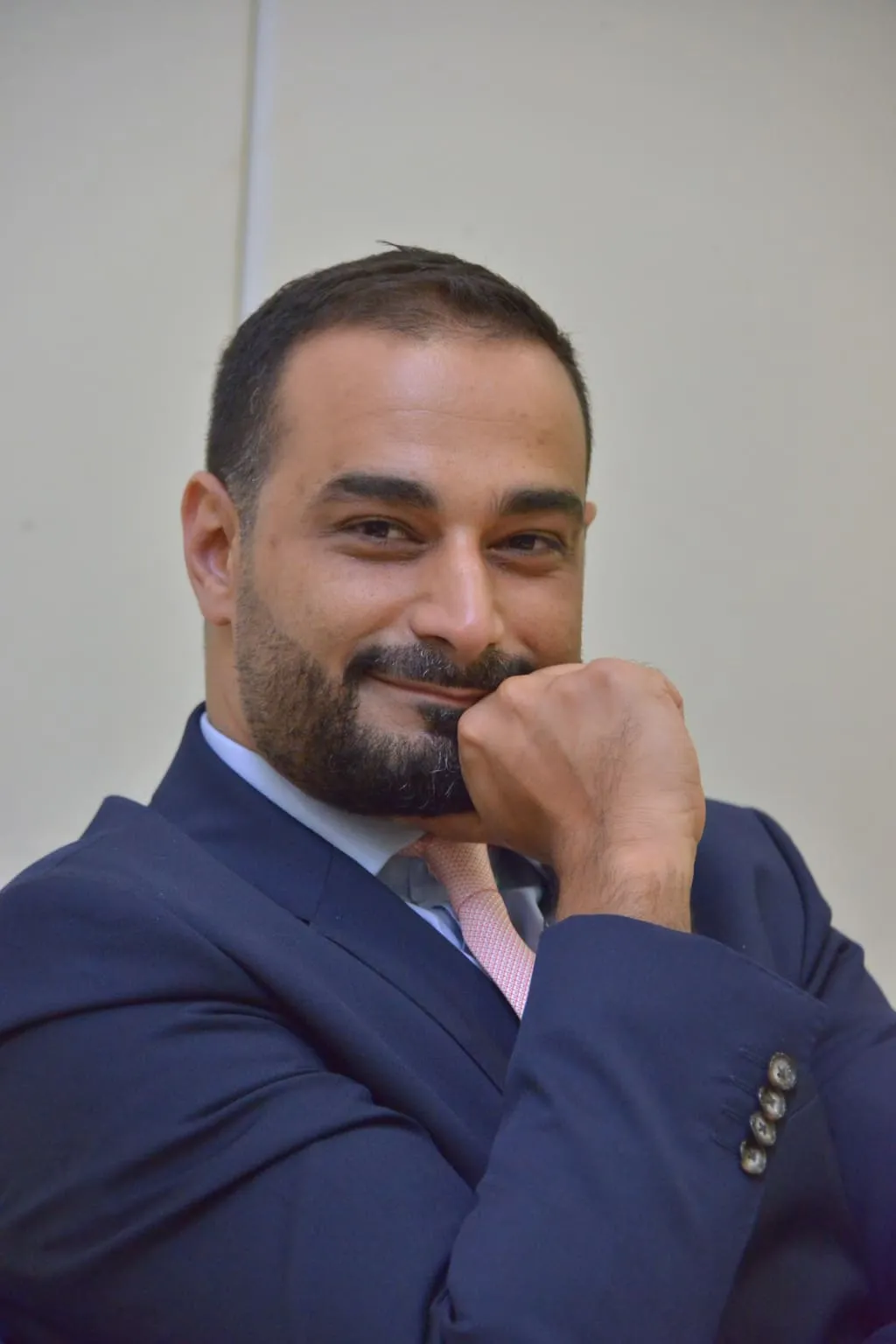
Bilal Orfali is one of the leading contemporary scholars of Arabic and Islamic studies. His research spans Arabic literature, Qur’anic studies,Sufism, narratology, and the editing of classical Islamic texts. Combining philological rigor with literary and historical analysis, Professor Orfali has made significant contributions to the study of Arabic intellectual and literary traditions while also helping preserve and disseminate important texts from theIslamic heritage through major editorial and publishing initiatives.
In their own words.
The most valuable aspect of the course was:
“Discovering that Islam is so much deeper than I thought it was. I've been searching for the longest time for something within Islam that was intellectually satisfying… I really hope you'll do more of these courses!”
“Prof. Rustom, with his cheerful manner and fluent expression, made even difficult concepts understandable in simple language.”
"The most valuable aspect of the course for me was understanding how Islamic teachings integrate spiritual, emotional, and physical healing. It helped me see health not just as a medical condition, but as a holistic balance rooted in faith, ethics, and compassion."
“Studying with Professor Chittick was deeply transformative and an immense privilege.”
“This was a wonderful, intellectually stimulating course! I especially appreciated the interactions with other students and Dr. Faruque’s responses to my questions, as well as the care taken to accurately present alternative viewpoints.”
The thing I liked about this most was:
“Its profound exploration of the spiritual and intellectual foundations of reality in Islam—particularly how metaphysical principles connect the Divine, cosmos, and human soul.”
“Very pleasurable to hear God spoken of in the context of an academic frame.”
"Thank you for sharing your knowledge and for the positive influence you've had in my life and the lives of those around me. Your lectures continue to inspire me to explore alternative paths and to support others in their healing journeys."
“It was a great honor and privilege for me to be able to attend Professor Chittick’s class. His mastery and knowledge of the subject of cosmology made the class very interesting.”
Professor Faruque’s course marked a shift from viewing AI as a technical challenge to an ontological one. In an era where “Dataism” threatens to reduce the human soul to a series of algorithms, this course provided a vital intellectual defense of the anthropocosmic self. Professor Faruque brilliantly articulated that while AI can process information, it cannot embody knowledge as a “mode of being.”
“The most valuable aspect of this course for me was gaining a deeper understanding of the foundations and significance of Muslim metaphysics.”
"The course provided a powerful argument in support of alternative healing through holistically making the learners identify with the entirety of life than just material and physical form."
“I felt transported to a different realm during every class, which almost never happens in an academic course. My heart and intellect were both fully engaged. This was due to Professor Chittick's deep knowledge, mastery/love for the subject, and exceptional skills as an orator.”
“This course needs to be translated into other languages spoken in the Muslim world and made more accessible to those audiences.”
“I’m very grateful to attend his astonishing lectures this fall initiated by the Tokat Institute. Barakallah.”
“I have greatly benefited from the alternative approaches to healing and well-being that your lectures provide. Your insights have opened my eyes to the deeper connections between mind, body, and spirit.”
“The most valuable aspect of this course was that Professor Chittick presented Islamic cosmology on its own terms rather than through a diluted Western philosophical lens.”
“This course helped me find answers to many questions that we need to address now and in the near future. Dr. Faruque delivered the course in a highly credible and professional manner.”
“Clarified my understanding of what Islamic metaphysics is, which I hadn’t understood, and the destructive influence of empiricism and related modern ideas/mindsets. This is a very freeing thing!”
“Very happy with the course and I hope there will be more similar courses in the future.”
“Dr. Chittick's presence and vast knowledge of the subject is invaluable.”
“The instructor’s openness to welcoming questions, critiques, and additions was what truly made the course engaging and valuable. The instructor's efforts and knowledge are undoubtedly appreciated.”
“The most valuable aspect of this course was the presence, wisdom, experiences, and discourses of beloved Mohammed Rustom. Following that is the amazing book he has written. What a gem. Great translations. Organized beautifully. The third aspect is the community of beloveds who joined, shared, and contributed with their presences and questions.”
“In this course Professor Chittick offered us a compact and stimulating presentation of Islamic cosmology. His lectures were well-informed and gave us a clear window into the basic concepts related to the field.”
“The themes covered, the resources (articles, books, and lecture slides) shared, and the thought-provoking lectures were all deeply enriching.”
“Absolutely amazing! please offer more of the same! Please!”
“The depth of reflection that was nurtured in the course was very helpful. An excellent course!”
“Your insights and scholarship have tremendously enriched my understanding of the subject. I have found your teaching style to be both informative and inspiring, and I appreciate the effort you put into making complex topics accessible.”
“The way the epistemic foundations of AI were expounded upon helped one see the trajectory of how we have arrived at this point, and how AI is a result and manifestation of this convoluted way of understanding consciousness, humanity, God, nature, and existence. I am grateful to Professor Faruque for sharing his views and perspectives on this topic, as well as his knowledge, which spans technology, religion, and spirituality.”
“I can’t overstate how amazing your class was and its impact on me. ‘Ayn Al-Qudāt is now a household name in our family. My oldest daughter and I would read passages from Inrushes of the Heart (incredible title), many of which are both beautiful and thought-provoking.”
“I would highly recommend it to others.”
